Auditor Skills Training Course For Internal Auditors.
Many workplace audits look successful on paper.
- Reports get completed.
- Boxes get checked.
- Procedures are followed.
But real problems are often missed.
- Important risks stay hidden.
- The same problems keep happening.
- Managers miss root causes.
- Issues become expensive later.
- Audits turn into box-ticking exercises.
This training helps participants:
- Plan audits more effectively.
- Find root causes and hidden risks.
- Gather reliable evidence.
- Ask better audit questions.
- Create clear audit reports.
- Support continuous improvement.
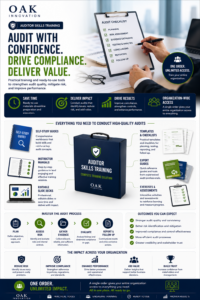
Internal Auditor Training For Compliance, Risk Management & Continuous Improvement.
This course is particularly well suited to:
- Internal auditors, quality professionals, and compliance specialists who want to strengthen their ability to plan, conduct, document, and follow up on audits.
- Managers and team leaders responsible for evaluating processes, controls, compliance, and performance within their areas of responsibility.
- Professionals involved in audit programs who want to improve audit consistency, objectivity, and effectiveness.
- Individuals seeking stronger interviewing, observation, questioning, and evidence-gathering skills.
- Leaders looking for practical guidance on audit planning, team selection, scheduling, scope definition, and audit management.
- Organizations committed to building internal auditing capability, strengthening compliance, and driving continuous improvement.
Learning Objectives.
By the end of your course, participants will:
- Explore different types of audits.
- Understand how to set up an audit schedule.
- Examine how to form an audit team.
- Understand how to perform a basic internal audit.
- Understand how to manage relevant documentation.
- Examine an internal audit process.
Key Modules & Frameworks To Teach.
Participants gain the knowledge and practical auditing skills needed to plan, conduct, document, and follow up on internal quality audits with confidence.
They learn how to identify risks, verify compliance, gather objective evidence, and support continuous improvement throughout the organization.
1. Foundations of Quality Auditing
Effective audits begin with a clear understanding of their purpose and value.
In this module, participants learn the fundamentals of internal auditing and how audits help organizations maintain standards, improve processes, and identify opportunities for improvement.
- Understand the objectives and purpose of quality audits.
- Learn the principles of criteria-based auditing.
- Recognize how audits support compliance and continuous improvement.
- Understand the different types of audits and when to use them.
2. Planning Effective Internal Audits
Successful audits require preparation and planning.
Participants learn how audit systems operate, how audit scopes are defined, and how effective preparation improves audit outcomes.
- Understand the key stages of the audit process.
- Prepare effectively before an audit begins.
- Define audit scope, objectives, and criteria.
- Review audit history and process flow information.
- Recognize the business benefits of effective auditing.
3. Preparing Audit Teams For Success
Quality audits depend on clear responsibilities and effective teamwork.
This module shows participants how to organize audit activities, coordinate resources, and prepare documentation that supports consistent audit performance.
- Define audit team roles and responsibilities.
- Plan and schedule audits efficiently.
- Create effective audit checklists and supporting documents.
- Improve collaboration and communication within audit teams.
- Prepare teams to conduct audits consistently and professionally.
4. Managing the Audit Process
Participants learn to conduct audits from start to finish using a structured, professional approach.
They develop the skills needed to gather evidence, interview employees, make observations, and accurately document findings.
- Prepare and lead effective opening meetings.
- Gather, review, and verify audit evidence.
- Use questioning techniques to obtain useful information.
- Strengthen observation and analytical skills.
- Develop accurate note-taking and record-keeping practices.
- Understand when to continue, pause, or escalate audits.
5. Identifying Non-Compliance
One of the most important responsibilities of an auditor is accurately recognizing and documenting non-compliance.
Participants learn how to evaluate findings, classify issues, and create reports that support corrective action.
- Identify and document non-compliance correctly.
- Create clear and objective non-conformance reports.
- Evaluate audit findings using appropriate criteria.
- Understand the significance and scaling of audit findings.
6. Final Audit Steps
Audits create value only when findings are communicated clearly and followed by action.
This module teaches participants how to conclude audits professionally and support meaningful improvements across the organization.
- Conduct productive and professional closing meetings.
- Create clear, accurate, and actionable audit reports.
- Present audit findings with confidence and credibility.
- Support corrective action planning and implementation.
- Monitor follow-up activities and verify improvements.
- Encourage a culture of continuous improvement.
Easy To Deliver
The materials are written in a practical step-by-step format that makes delivery straightforward and engaging.
Trainers can confidently facilitate the workshop using the detailed instructor guide, participant activities, and ready-to-use course materials.
Content Quality
Praised for structure, depth, and relevance to modern training needs.
★★★★★ “Well-structured series relevant to today’s HR professionals. Information is well-organized and easy to understand.” – Bernard Cronin, Director of HR, Apple.
★★★★★ “The content is incredibly relevant, well-structured, and grounded in sound training principles.” – James L. Steward.
★★★★★ “Very comprehensive. The support tools provided were impressive. Notes for facilitator were simple and easy to follow.” – Tracey O’Shea, Leadership Development, Forest Laboratories.
★★★★★ “As a trainer, I appreciate the trainer background materials so I can study the details and background.” – Andrea Chisholm, Critical Success Consulting.
Frequently Asked Questions.
Who should attend this auditor skills course?
This course is ideal for internal auditors, quality professionals, compliance specialists, managers, supervisors, and anyone responsible for conducting audits or evaluating business processes.
What auditing skills are covered in this course?
Participants learn audit planning, interviewing techniques, evidence gathering, audit reporting, non-compliance identification, corrective action follow-up, and continuous improvement practices.
Is this suitable for new internal auditors?
Yes. The course provides a structured framework that helps both new and experienced auditors conduct audits confidently and consistently.
Can I edit and add my own branding?
Yes. All files can be changed, customized, and reused as often as you need.
What do I get?
You get an 87-slide training course, an 81-page instructor guide, a participant workbook, and 17 activities. It gives you a simple way to teach auditors how to find problems, write clear reports, and support corrective actions.
Is this too technical for beginners?
No. The course is practical, easy to follow, and designed to be clear and straightforward.
Can I use this course more than once?
Yes. It is designed to be delivered again and again to different groups.
Do I need a lot of audit experience to teach this course?
No. The instructor guide includes step-by-step help so you can deliver the training with confidence.
Helping Trainers And HR Teams Cut Course Development From Weeks To Hours.