How You Can Teach A Course On Customer Focus Skills Without Creating Any Content From Scratch.
Now you can teach practical customer focus skills that help your participants understand customer needs, improve interactions and create better customer experiences.
Customers teaching customer-focused training programs also regularly choose CRM Skills and Managing Complaints.
Meet Our Customers.



































Who Are These Training Materials For?
These ready-to-use training course materials are used by corporate trainers, independent consultants, HR professionals, educators, and people managers.
What’s Covered In This Training Course Material?
1. How to create customer focus
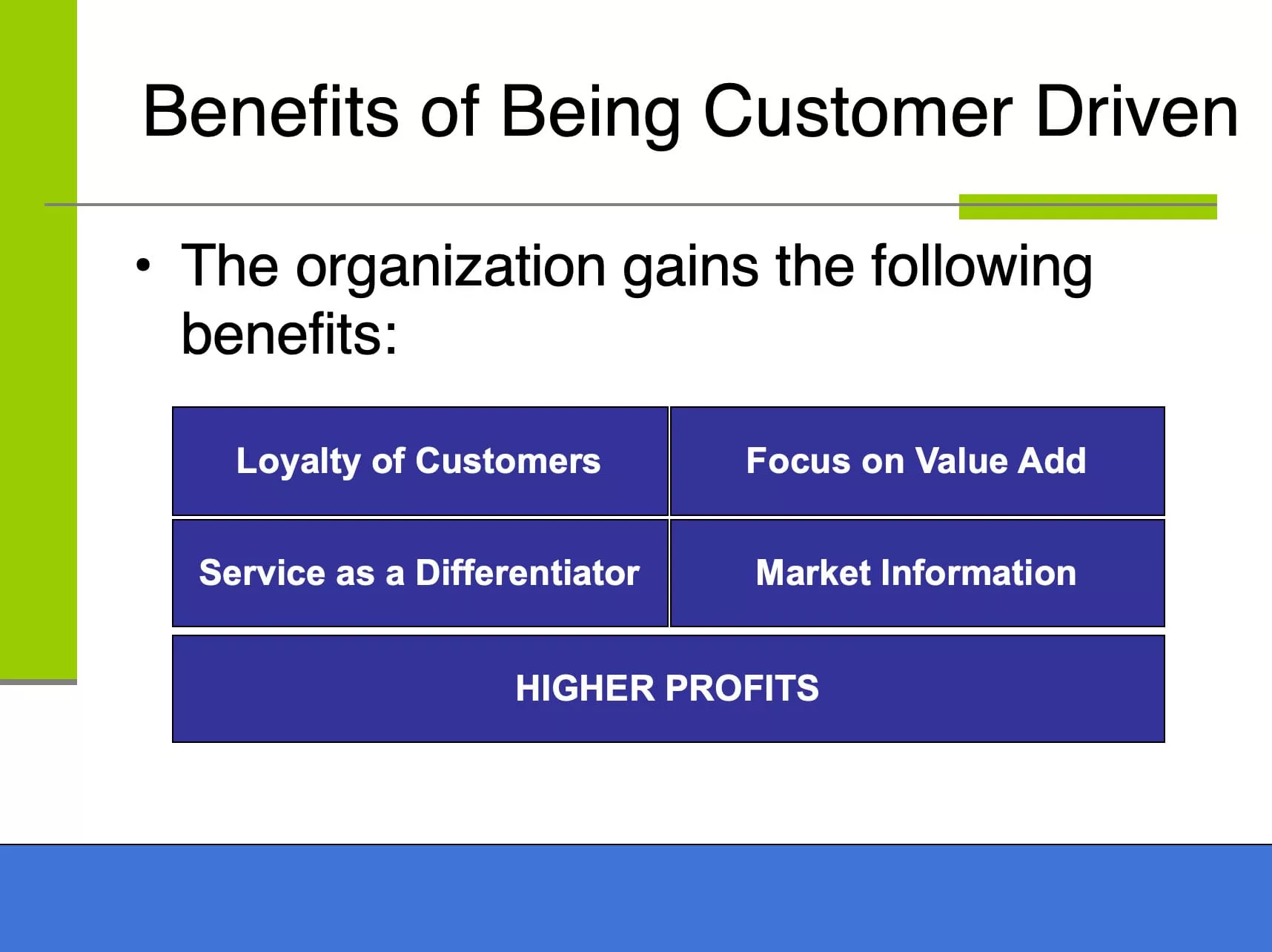
- The main benefits of being customer-focused.
- The essential aspects of customer focus (e.g., loyalty and value-added service) and the effects of poor customer focus.
- Market information and profit.
2. The customer service environment
- The main characteristics of excellent customer service.
- What is the customer service environment.
- Customer service as a process.
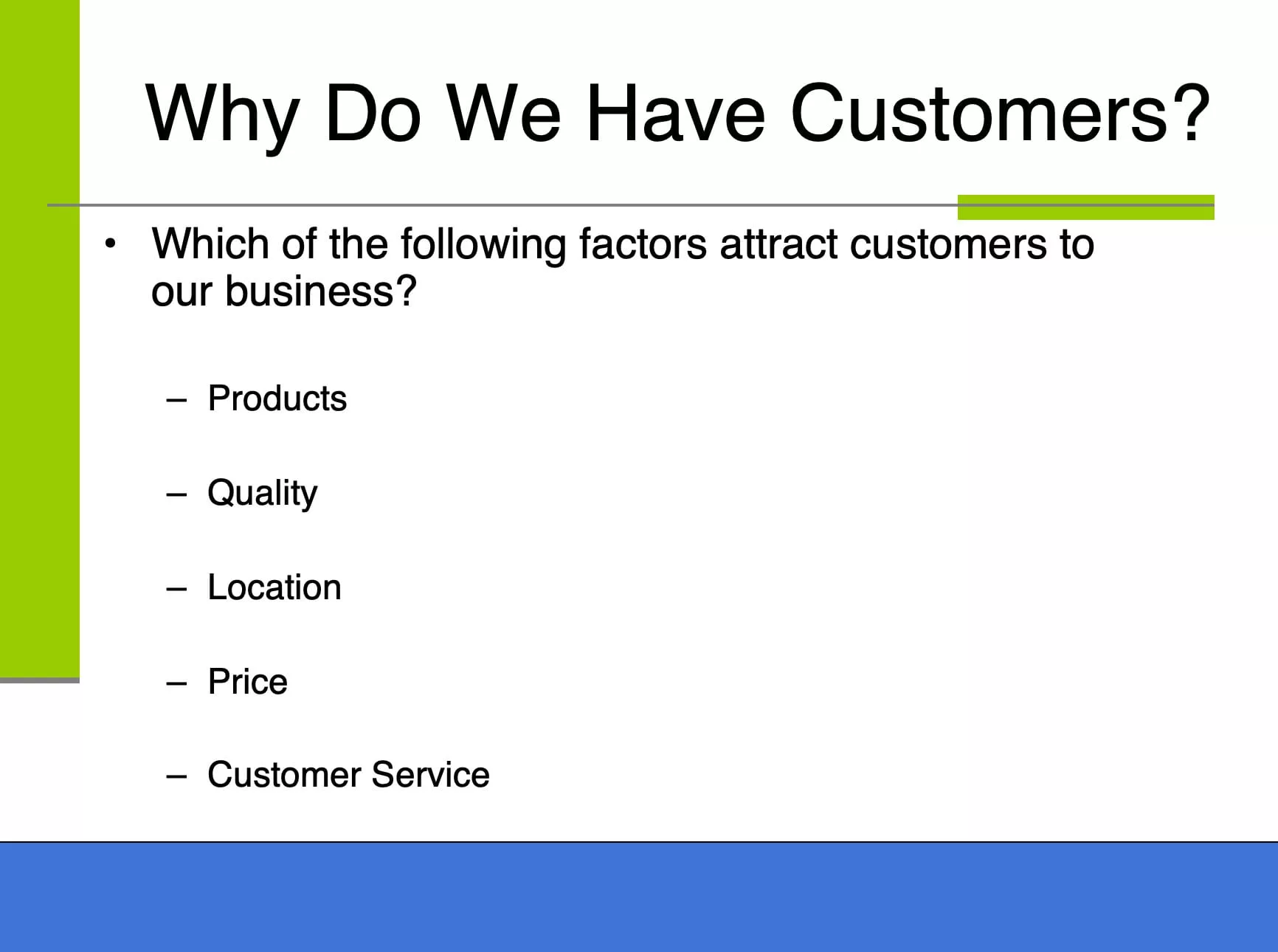
- Why we need customers.
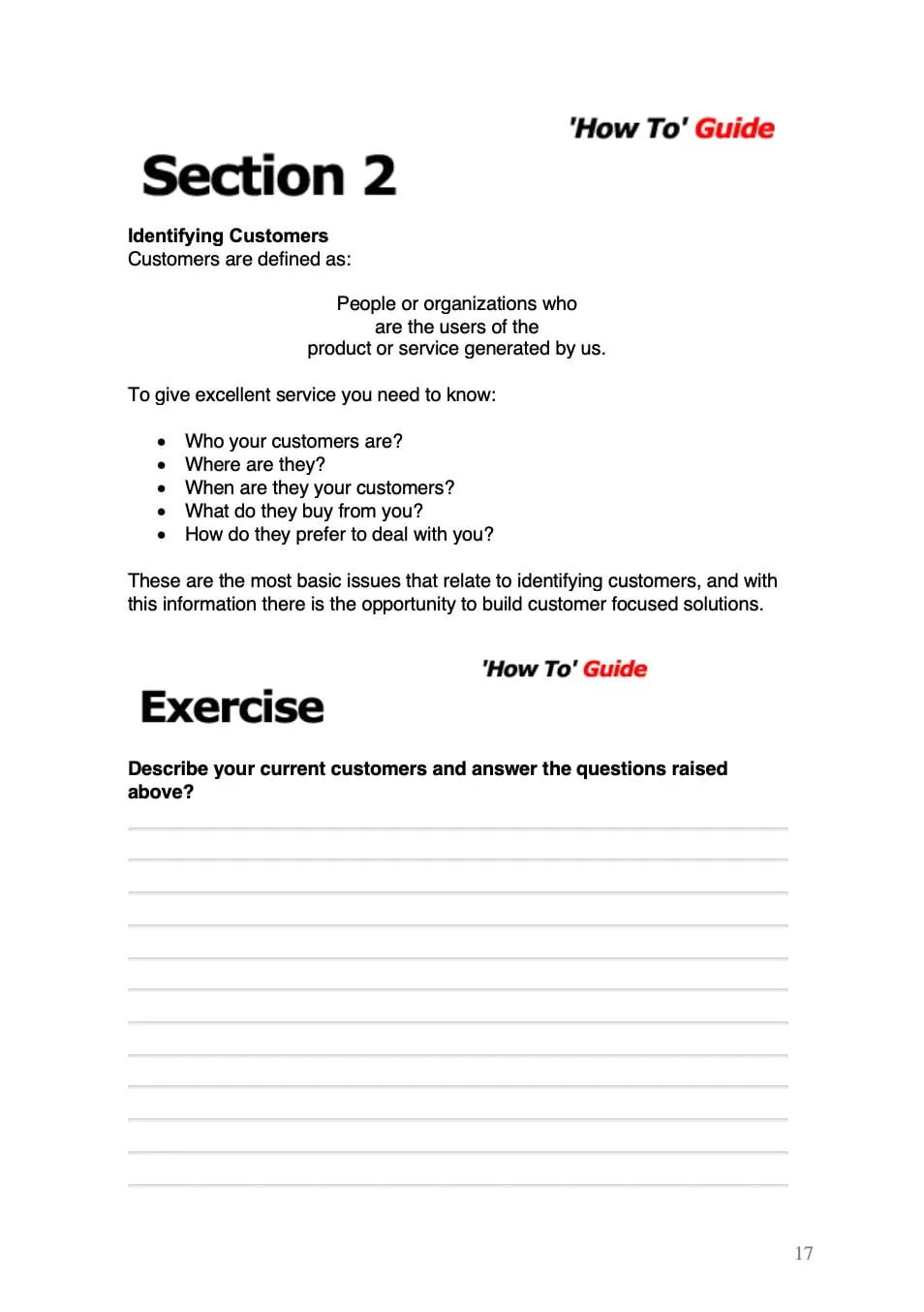
- How to identify customers.
- The importance of the Pareto Principle.
3. Poor customer-centric practices
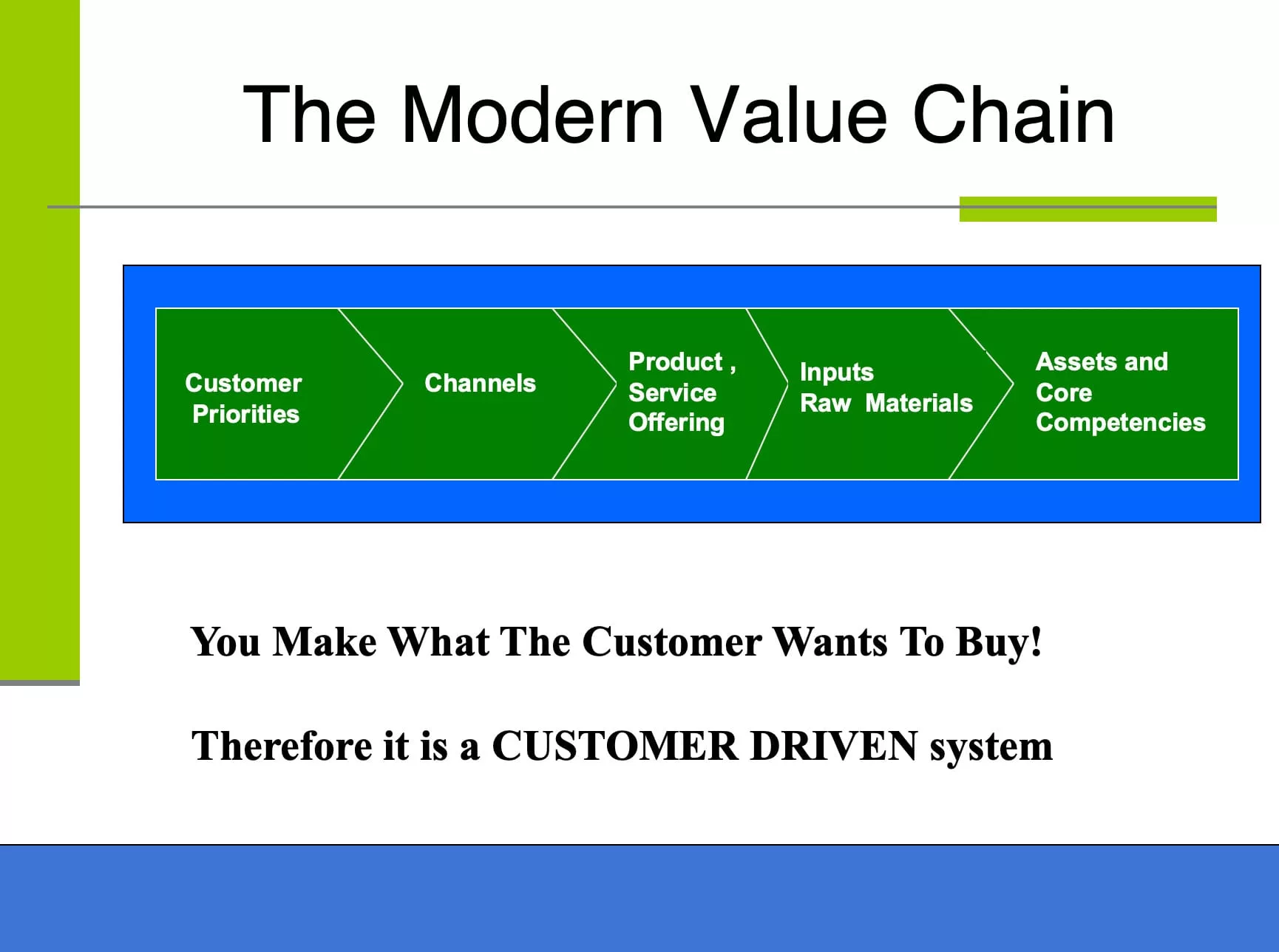
- Exploring how a product-centric company focuses on selling the same products. And, to as many customers as possible.
- Examining how a customer-centric approach concentrates on selling more products. And, to the same customers by providing a positive customer experience.
4. How to know your customers
- Customer Loyalty.
- Switching costs.
- Common reasons why customers leave.
- Crises and commitments.
5. Customer service culture
- What are the main influences on a customer service environment.
- Standards, innovation, and excellent service.
6. Maximizing communication
- Key communication practices, including active listening skills.
- Customer styles.
- How to introduce an effective complaint-handling system.
Free Workshop Preview.
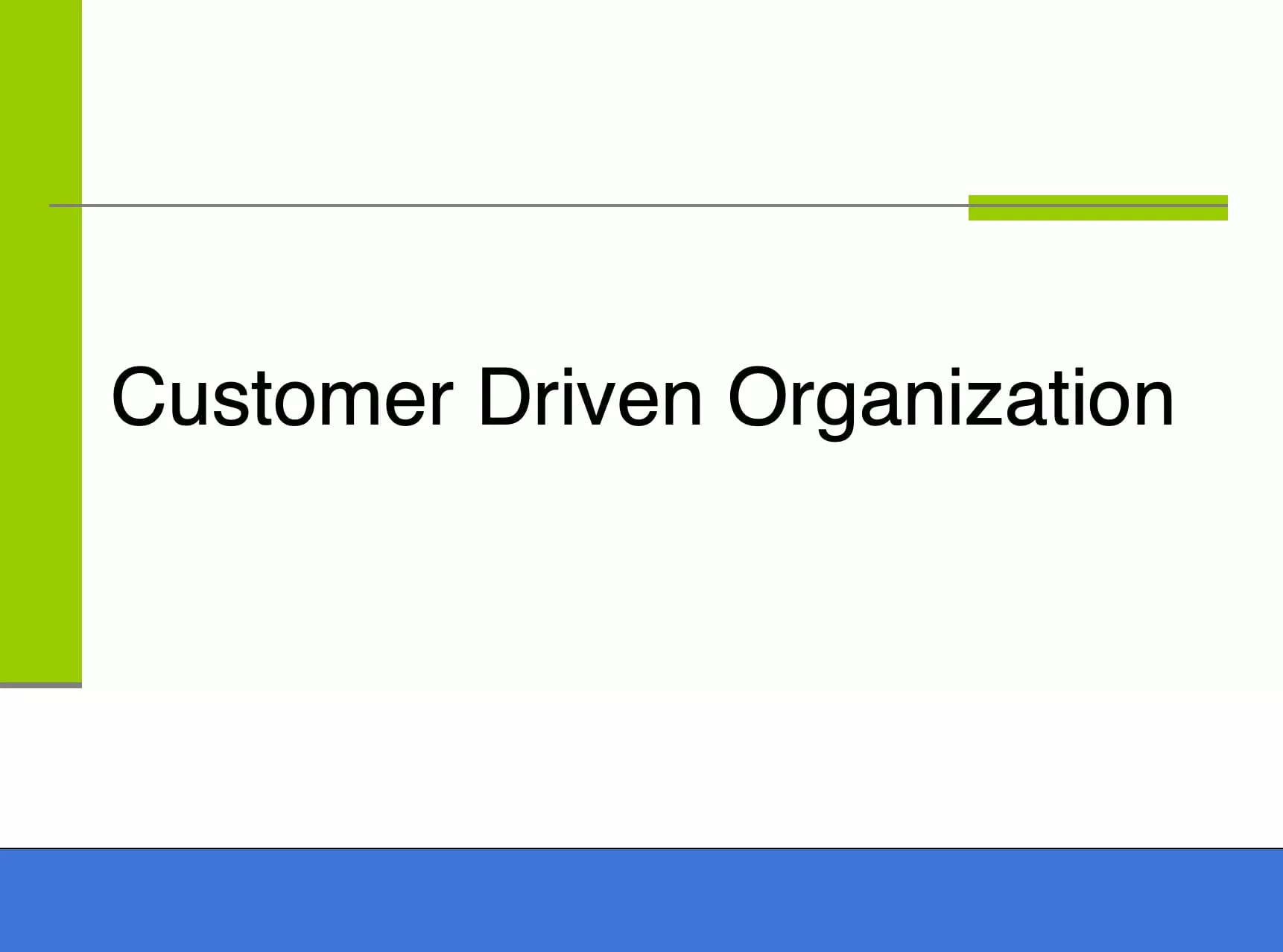
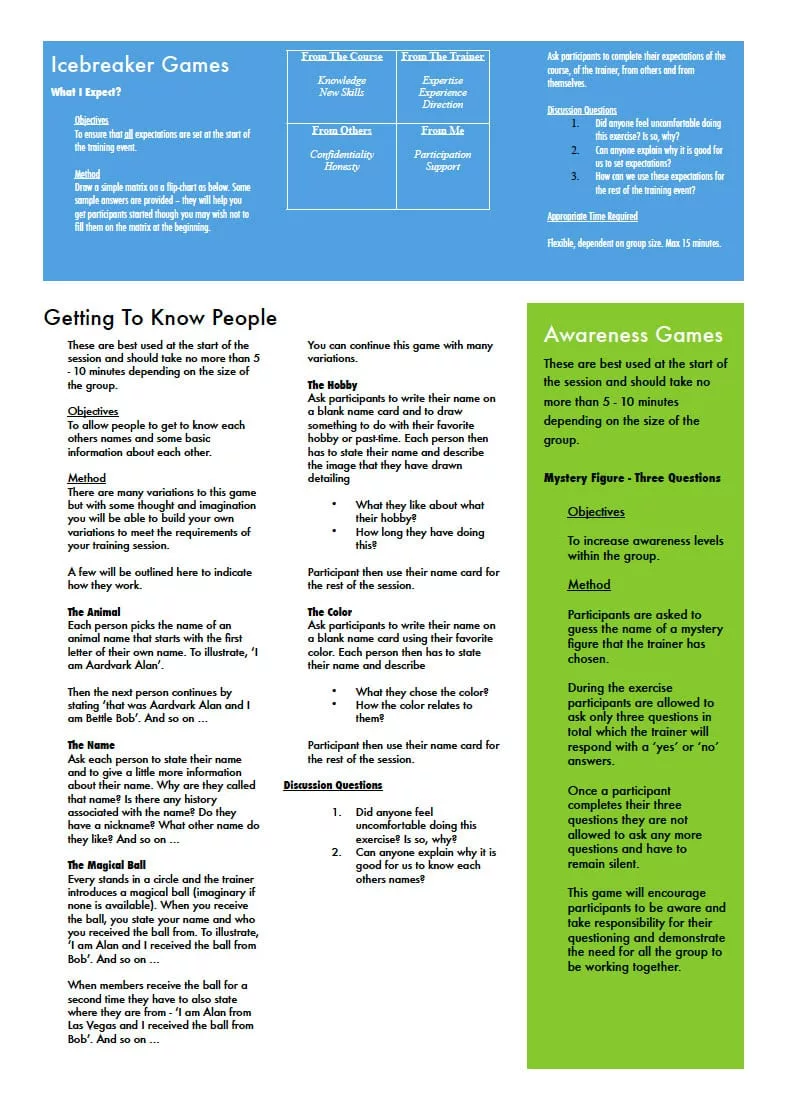
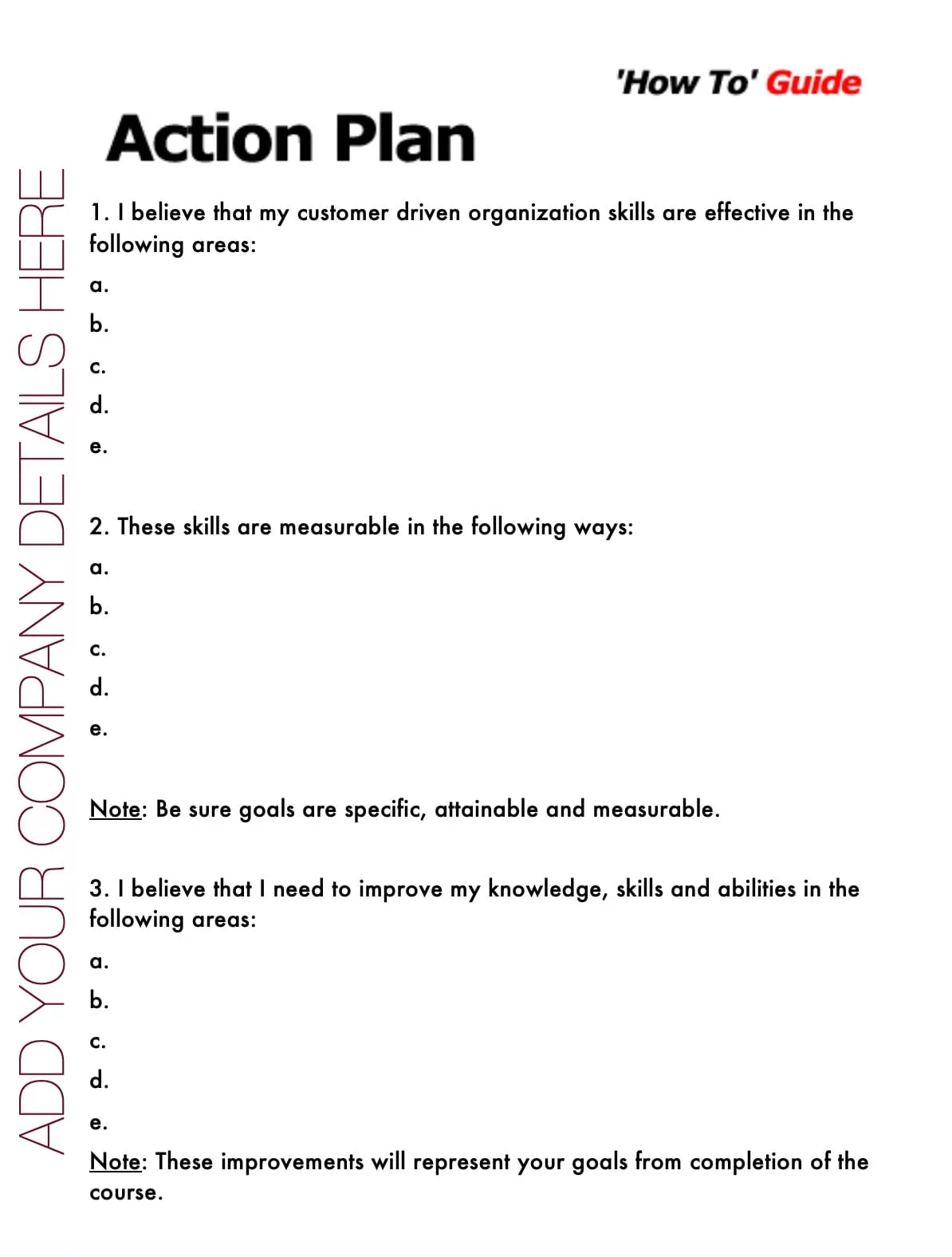
Below are sample materials from this course.
We intentionally use generic backgrounds and titles, so you can easily rebrand and customize everything as your own.
No subscriptions. No recurring fees. No attribution required.
What Trainers Say.
★★★★★ “Speed in responding is phenomenal… Regular updates at no extra cost.” – Jeffrey L. Buller, ATLAS.
★★★★★ “Buying Oak materials for 9 years—personal service is invaluable.” – Ellen Bothwick, Canine Events.
★★★★★ “Feedback from trainers and participants was very positive—huge job done!” – Larina Bichakhchyan, ProCredit Bank.
★★★★★ “Helpful, knowledgeable staff… Solid foundation for training needs.” – Darryl Treadwell.
90 slides • 96-page guide • Participant workbook • 17 activities • Instant download • Use forever
Meet Our Customers.





























Explore More Customer Service Excellence Training Materials.
-

Advanced Presentation Skills: Training Program For Corporate Trainers
$97.00 - Full Toolkit Add to cart -

Complaint Handling Skills: PPT & Facilitator Guide
$97.00 - Full Toolkit Add to cart -

Conflict Resolution Skills: Courseware & Toolkit
$97.00 - Full Toolkit Add to cart -

CRM Skills: Editable Corporate Courseware
$97.00 - Full Toolkit Add to cart -

Customer Focus Skills: 100% Editable Trainer Package
$97.00 - Full Toolkit Add to cart -

Facilitation Skills: Single Day Training Toolkit
$97.00 - Full Toolkit Add to cart -

Negotiation Skills Courseware For Trainers (Editable PowerPoint Kit)
$97.00 - Full Toolkit Add to cart -

Problem Solving Skills: Participant Workbook + Exercises
$97.00 - Full Toolkit Add to cart -

Sales Skills: Full-Day Workshop Kit (Editable)
$97.00 - Full Toolkit Add to cart -

Social Skills: Fast-Track Trainer Toolkit
$97.00 - Full Toolkit Add to cart -

Telesales Skills Courseware: Trainer’s Handbook Pack
$97.00 - Full Toolkit Add to cart

Meet Catherine, the passionate mind behind Oak Innovation. For more than 30 years, she’s been creating practical, engaging courses that help trainers, L&D professionals, managers, and consultants save valuable preparation time. Her goal is simple: make course creation easier, so you can spend less time preparing and more time delivering great training.