
A Great Presentation Starts Before The First Slide. Help Your Participants Understand What Makes A Message Connect.
Standing in front of an audience. Presenting a recommendation to senior management. Explaining a complex idea to colleagues. Responding to a question you weren’t expecting.
For many professionals, these situations represent some of their most challenging workplace communication responsibilities.
Effective presentations require more than attractive slides or detailed subject knowledge. They involve preparation, clear communication, purposeful structure, audience awareness, and the ability to respond to changing circumstances.
Developing a training workshop that brings these skills together can also be a considerable undertaking.
There are presentation techniques to research, slides to prepare, facilitator notes to develop, participant resources to create, and practical learning activities to organize.
Oak Innovation’s Presentation Skills Training Toolkit gives you a professionally prepared foundation for delivering your own workshops without developing every learning resource from scratch.
You receive 37 editable PowerPoint slides, a 29-page trainer guide, a substantial 92-page participant workbook, 17 practical training activities, and four bonus scenarios.
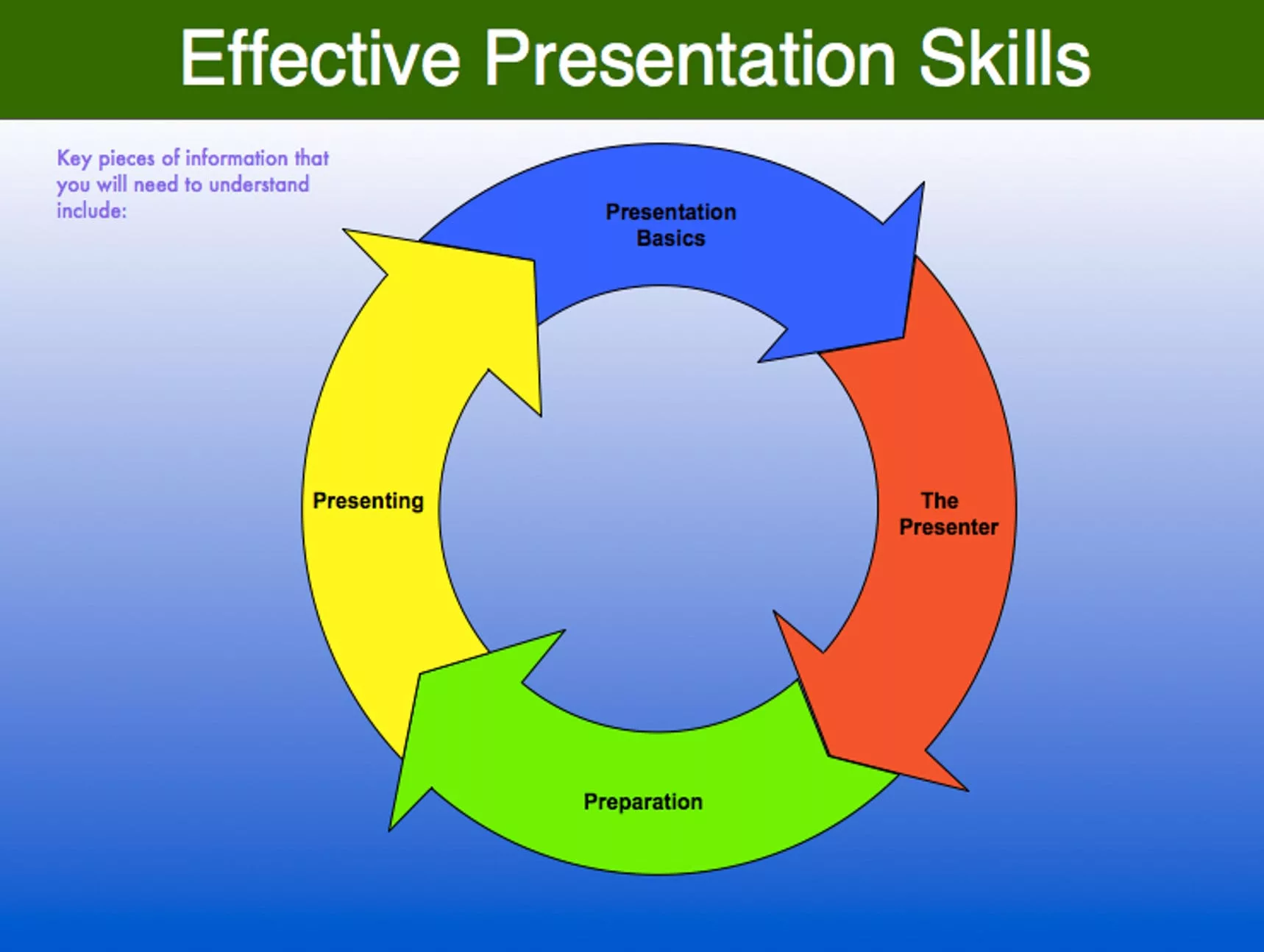
Across nine core modules, participants explore the role of the presenter, presentation preparation, communication techniques, visual aids, audience engagement, confident delivery, and persuasive presentation structure.
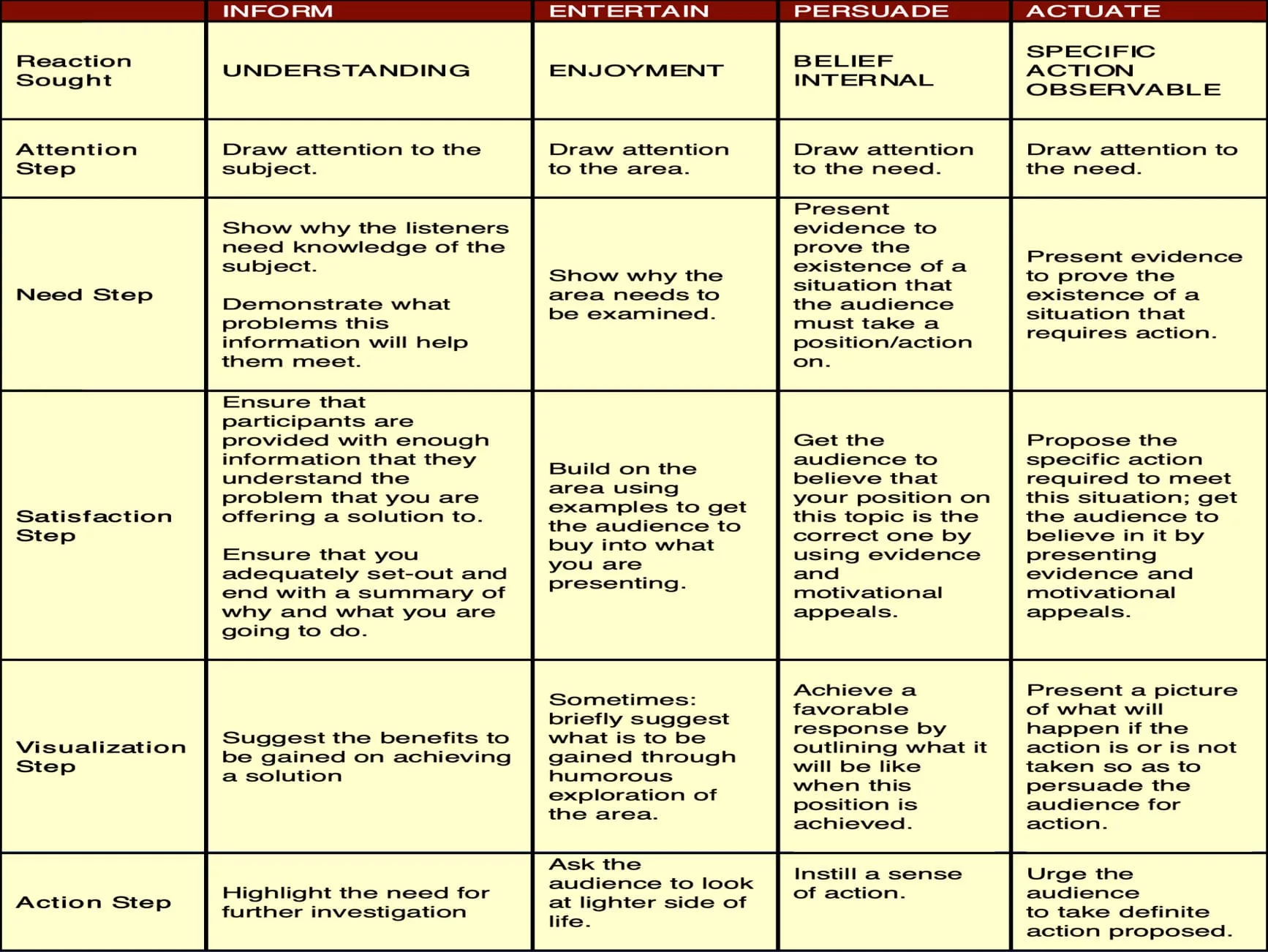
The courseware also introduces Monroe’s Motivated Sequence, an established framework for organizing persuasive presentations around audience attention, needs, solutions, visualization, and action.
With the core training content already prepared, you can concentrate on creating opportunities for participants to practice, reflect on their communication habits, and receive constructive feedback.
Download the complete trainer toolkit, customize the materials for your audience, and deliver professional presentation skills training under your own branding.
Spend your preparation time thinking about how your participants will present, rather than creating another presentation skills course from scratch.
Developing a broader professional communication or management development program? Combine this course with our dedicated training materials on facilitation skills and business meeting management to explore related audience engagement, group communication, and meeting leadership capabilities.
Trusted By Training Professionals Developing Workplace Communication Skills.







































Who Are These Presentation Skills Training Materials For?
These editable presentation skills training resources are designed for professionals who want to deliver structured workshops on presentation preparation, confident communication, persuasive delivery, and audience engagement.
- Corporate trainers delivering presentation skills, professional communication, and workplace effectiveness workshops.
- HR and learning and development professionals supporting employee communication skills and management development initiatives.
- Independent trainers and training consultants preparing customized presentation skills workshops for their clients.
- Managers and team leaders responsible for developing the presentation and communication capabilities of their employees.
- Sales trainers helping professionals develop clearer and more persuasive approaches to communicating ideas, proposals, and recommendations.
- Professional development facilitators delivering workshops on public speaking, audience engagement, and confident communication.
- Educators introducing presentation preparation, delivery techniques, and persuasive communication concepts.
Whether you’re helping employees prepare for their first formal business presentation, supporting a management development program, or working with experienced professionals who want to refine their delivery techniques, you can adapt the materials to reflect your participants’ experience and responsibilities.
Learning Objectives.
By the end of your presentation skills workshop, participants will be able to:
- Understand the fundamental principles of effective presentations.
- Recognize different types of presentations and their purposes.
- Understand the responsibilities and expectations associated with the role of the presenter.
- Recognize the importance of first impressions and nonverbal communication.
- Explore how voice, facial expressions, gestures, and visual feedback can influence presentation delivery.
- Understand how complementary communication channels can support a presentation.
- Identify appropriate presentation tools, visual aids, and supporting resources.
- Recognize common presentation barriers and unhelpful delivery habits.
- Define the purpose of a presentation and organize its content accordingly.
- Distinguish between presenting data and communicating meaningful information.
- Explore approaches to managing presentation transitions, audience questions, and interruptions.
- Develop approaches to opening presentations with greater confidence.
- Understand and apply the principles of Monroe’s Motivated Sequence.
- Explore techniques for capturing audience attention and communicating persuasive messages.
- Develop clear calls to action that reflect the purpose of a presentation and the needs of its audience.
What’s Covered.
The courseware covers nine interconnected areas of presentation skills, providing a structured progression from understanding presentation fundamentals to preparing, delivering, and organizing persuasive presentations.
Participants explore the communication techniques, preparation practices, presentation tools, and audience considerations that can contribute to more effective delivery.
1. Understanding Presentation Fundamentals
Introduce participants to the principles of effective presentations and explore the factors that may influence presentation performance.
- Presentation basics – exploring the fundamental elements of communicating information to an audience.
- Presentation performance – examining the relationship between preparation, communication, and delivery.
- Two types of presentations – introducing different presentation approaches and considering their purposes.
A presentation may be intended to explain information, communicate progress, introduce an idea, or encourage an audience to consider a particular course of action.
Understanding the purpose of a presentation provides a foundation for deciding how its content should be organized and delivered.
Trainers can incorporate familiar examples of workplace briefings, business proposals, project updates, and management presentations to help participants explore these concepts.
2. Understanding The Role Of The Presenter
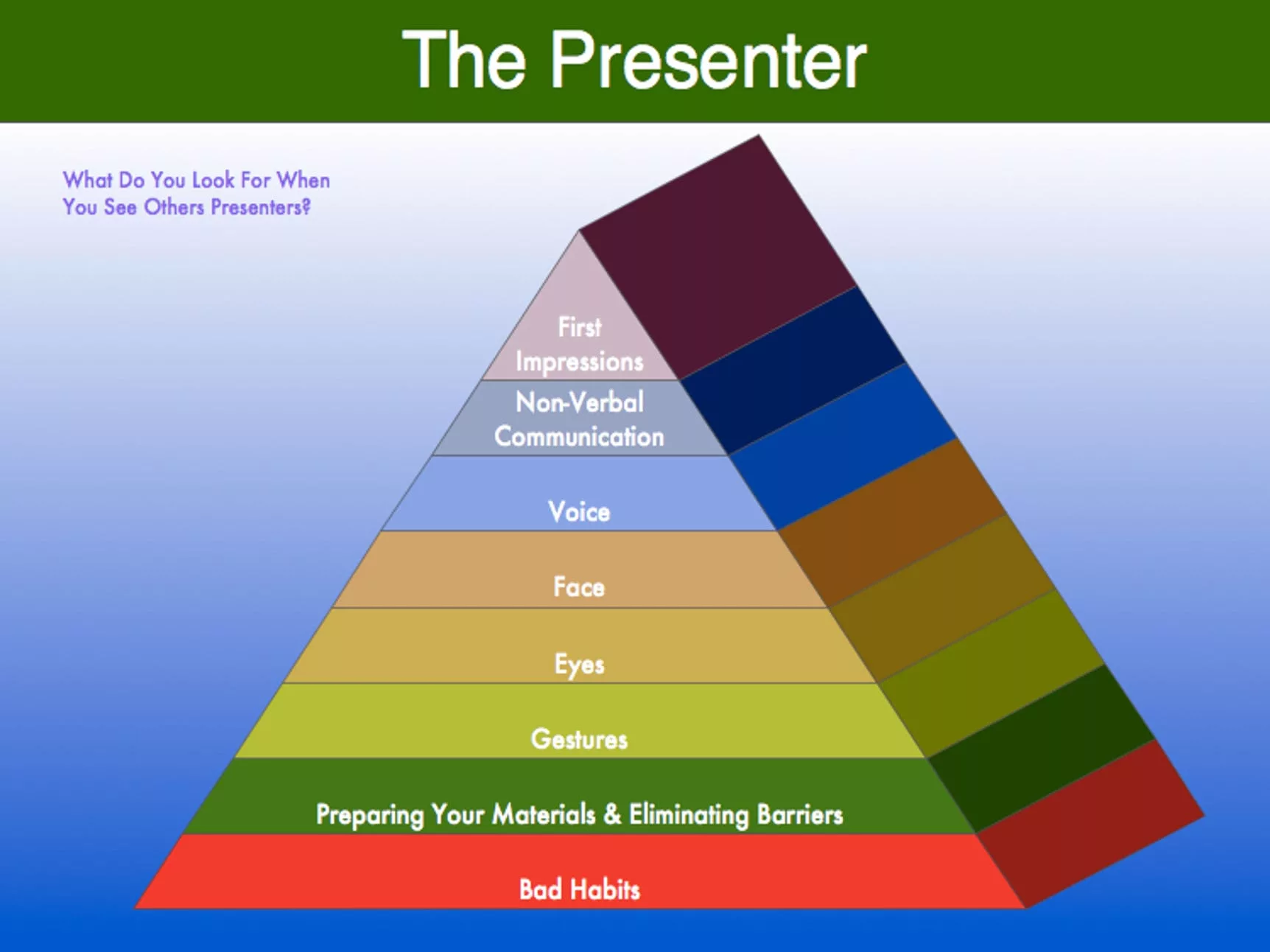
Explore the responsibilities of the presenter and examine how communication behaviors, audience expectations, and first impressions can influence the presentation experience.
- Expectations and assumptions – considering what presenters and audiences may expect from a presentation.
- Managing first impressions – exploring how initial communication and presentation behaviors can influence audience perceptions.
- Nonverbal communication – examining communication beyond the spoken message.
- Effective use of voice – considering how vocal delivery can influence clarity and audience understanding.
- Facial expressions – exploring their role in communicating meaning and engagement.
- Visual feedback – recognizing audience responses and considering how these may inform delivery.
- Gestures – examining how physical communication can complement a spoken message.
Audiences experience more than the words a presenter uses.
Vocal delivery, facial expressions, gestures, and responses to audience feedback can all influence how a message is received.
Trainers can encourage participants to reflect on their existing communication habits and consider how different delivery approaches may affect audience understanding.
The emphasis is on developing purposeful communication rather than expecting every presenter to adopt the same personal delivery style.
3. Preparing With Greater Confidence
Explore the role of complementary communication channels and consider how different methods of communicating can support presentation preparation and delivery.
- Complementary communication channels – examining how different forms of communication can work together during presentations.
- Supporting the spoken message – considering how visual and nonverbal communication may reinforce key information.
- Preparing for delivery – exploring the relationship between communication choices, preparation, and presentation confidence.
A presentation does not have to rely exclusively on spoken information.
Visual resources, written information, demonstrations, and other communication channels may help audiences understand and engage with the subject being presented.
Trainers can encourage participants to consider which communication approaches are appropriate for their presentation purpose, audience, and working environment.
4. Selecting The Right Presentation Tools
Examine the practical resources available to presenters and explore how presentation tools can support communication, organization, and audience understanding.
- Presenter notes – exploring how supporting notes can help organize presentation content and delivery.
- Practical handouts – considering how written resources may reinforce important information.
- Visual aids – examining how visual resources can complement a presentation.
- Flip charts – exploring their potential use in explaining ideas and supporting audience interaction.
- Projectors – considering their role in displaying presentation information.
- Presentation software – examining the role of digital presentation tools in supporting communication.
Presentation tools should support the message rather than become a distraction from it.
Different presentation environments may require different combinations of visual resources, supporting materials, and delivery techniques.
Trainers can incorporate examples of presentation slides, handouts, visual aids, and workplace presentation resources to encourage discussion about their appropriate use.
This module establishes a foundation for selecting presentation tools according to the needs of the audience and the purpose of the presentation.
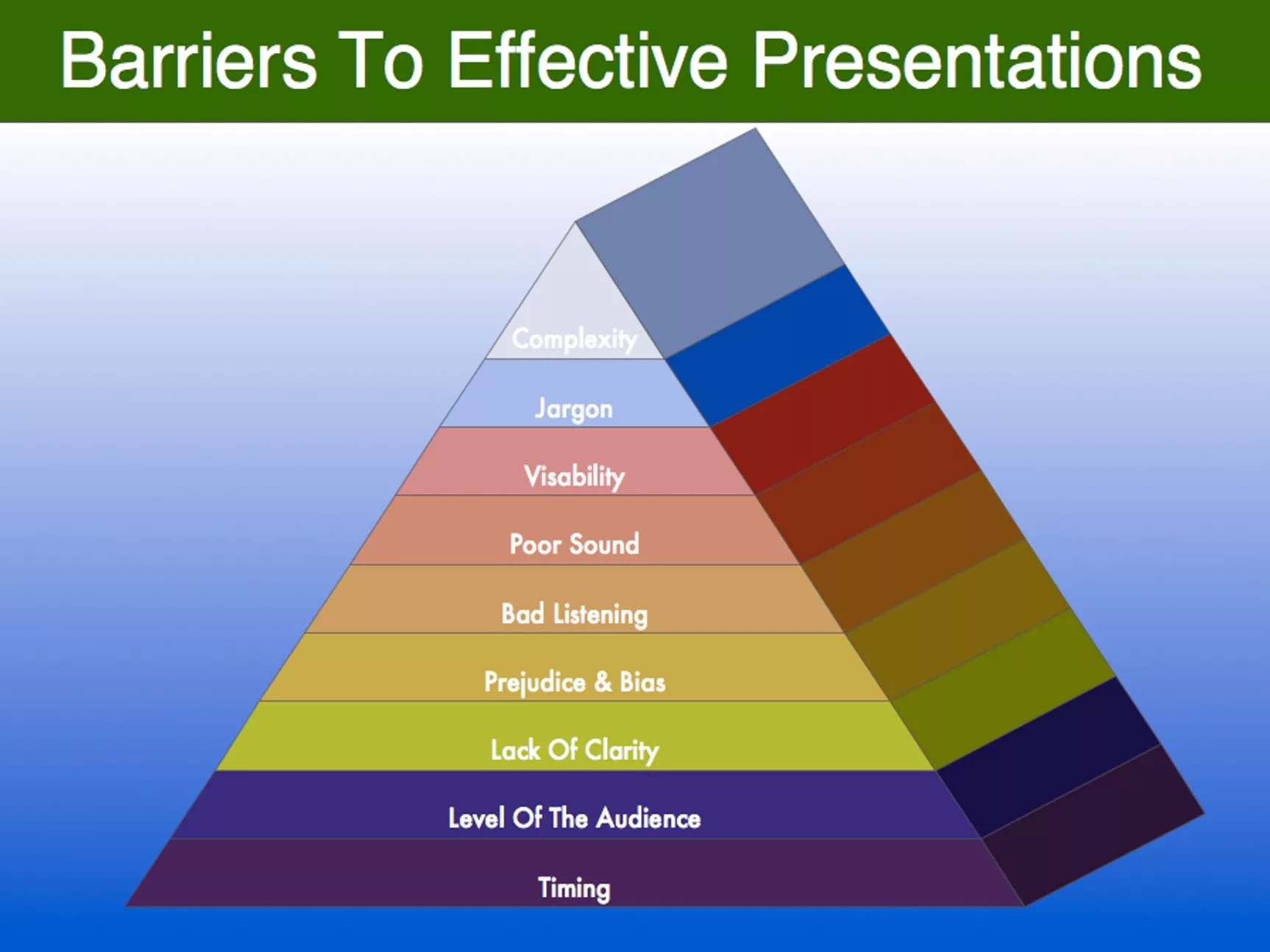
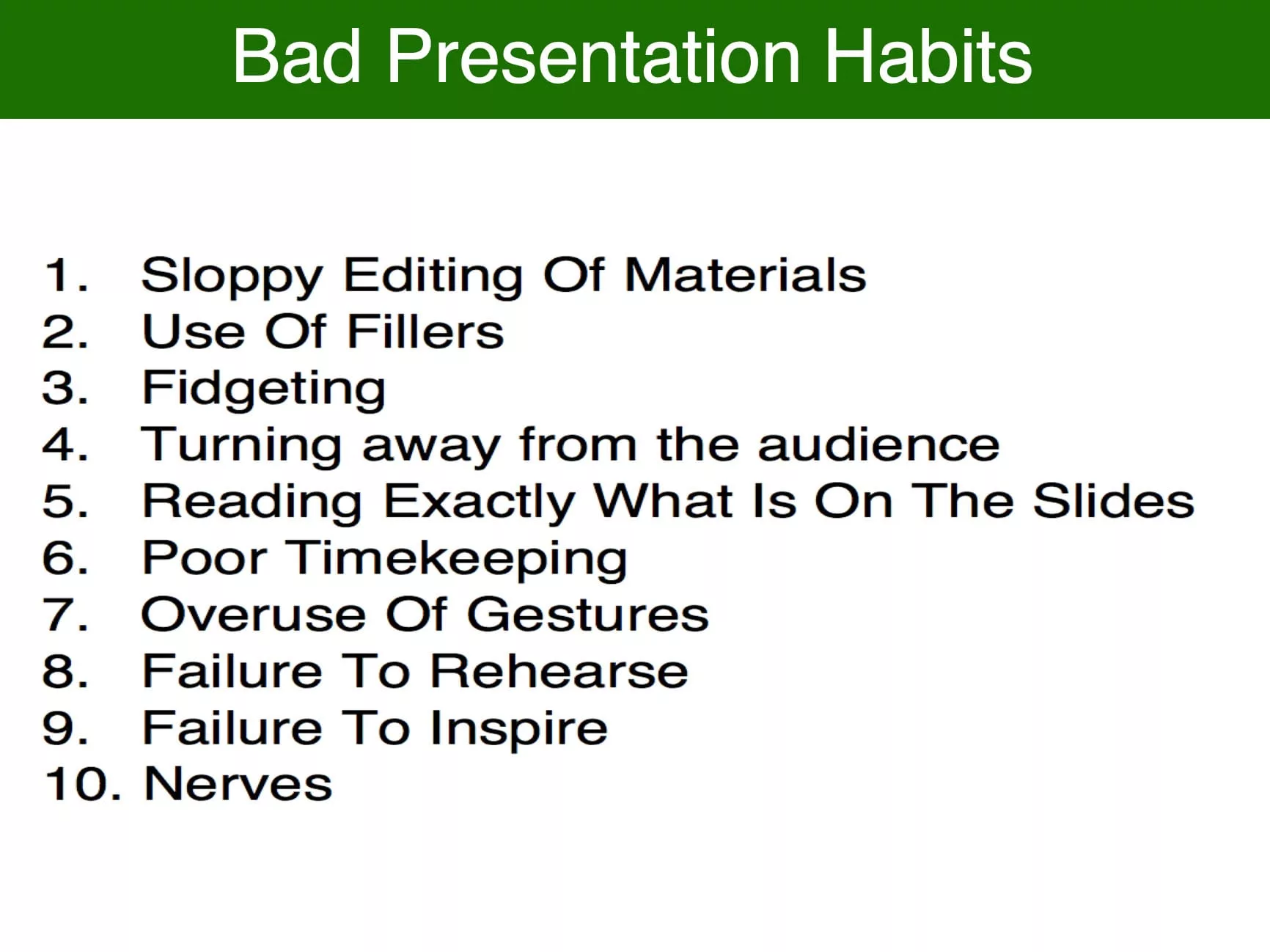
5. Recognizing And Overcoming Barriers To Effective Presentations
Explore common presentation barriers and examine how unhelpful communication habits and insufficient audience preparation may affect presentation delivery.
- Unhelpful presentation habits – recognizing behaviors that may interfere with clear communication or audience engagement.
- Barriers to effective presentations – identifying potential obstacles to communicating information successfully.
- Audience preparation – considering the importance of understanding audience expectations and requirements before presenting.
Overly complicated slides, unclear explanations, unfamiliar terminology, and insufficient preparation can make presentations more difficult for audiences to follow.
Presenters may also encounter challenges associated with their own communication habits, confidence, or familiarity with the subject.
Trainers can encourage participants to reflect on presentations they have attended or delivered and identify factors that supported or interfered with audience understanding.
The objective is to help participants recognize opportunities for improving their presentation practices without assuming that every presenter faces the same challenges.
6. Planning And Structuring A Presentation
Examine the preparation activities involved in developing a presentation, from identifying its purpose to organizing information and considering the needs of the audience.
- The importance of preparation – exploring why effective presentations require planning before delivery.
- Identifying the presentation purpose – establishing what the presentation is intended to communicate or achieve.
- Presentation structure – examining how content can be organized into a clear and purposeful sequence.
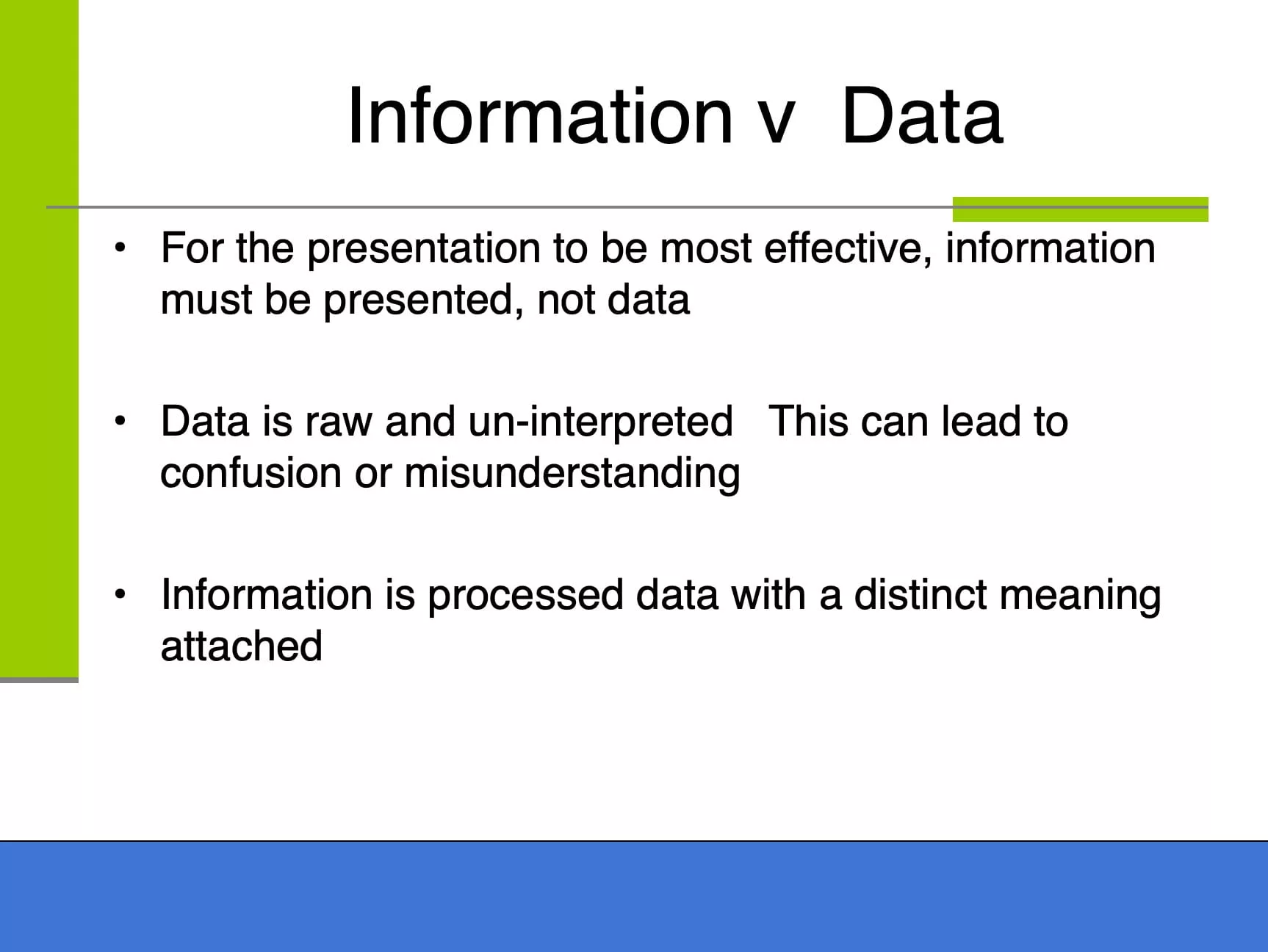
- Information versus data – understanding the distinction between presenting facts and communicating their meaning.
- Asking the right questions – exploring how relevant questions can help clarify presentation requirements.
- Practical presentation skills – connecting preparation and content organization with effective delivery.
A collection of facts, statistics, or presentation slides does not automatically create a clear message.
Presenters need to consider what information matters to their audience, why it matters, and how it can be communicated in a meaningful sequence.
Trainers can encourage participants to consider preparation questions such as:
- What is the purpose of this presentation?
- Who will be attending?
- What does the audience already know about the subject?
- What information is most relevant to the audience?
- What should the audience understand by the end?
- Is there a decision, response, or action the presentation is intended to encourage?
These considerations can help participants connect presentation preparation with audience understanding and purposeful communication.
7. Creating An Effective Presentation Environment
Explore the practical considerations associated with managing a presentation environment, maintaining audience engagement, and responding to questions or challenging audience behavior.
- Understanding the presentation audience – recognizing audience characteristics, expectations, and responses.
- Managing transitions – exploring how presenters can move between different sections of a presentation.
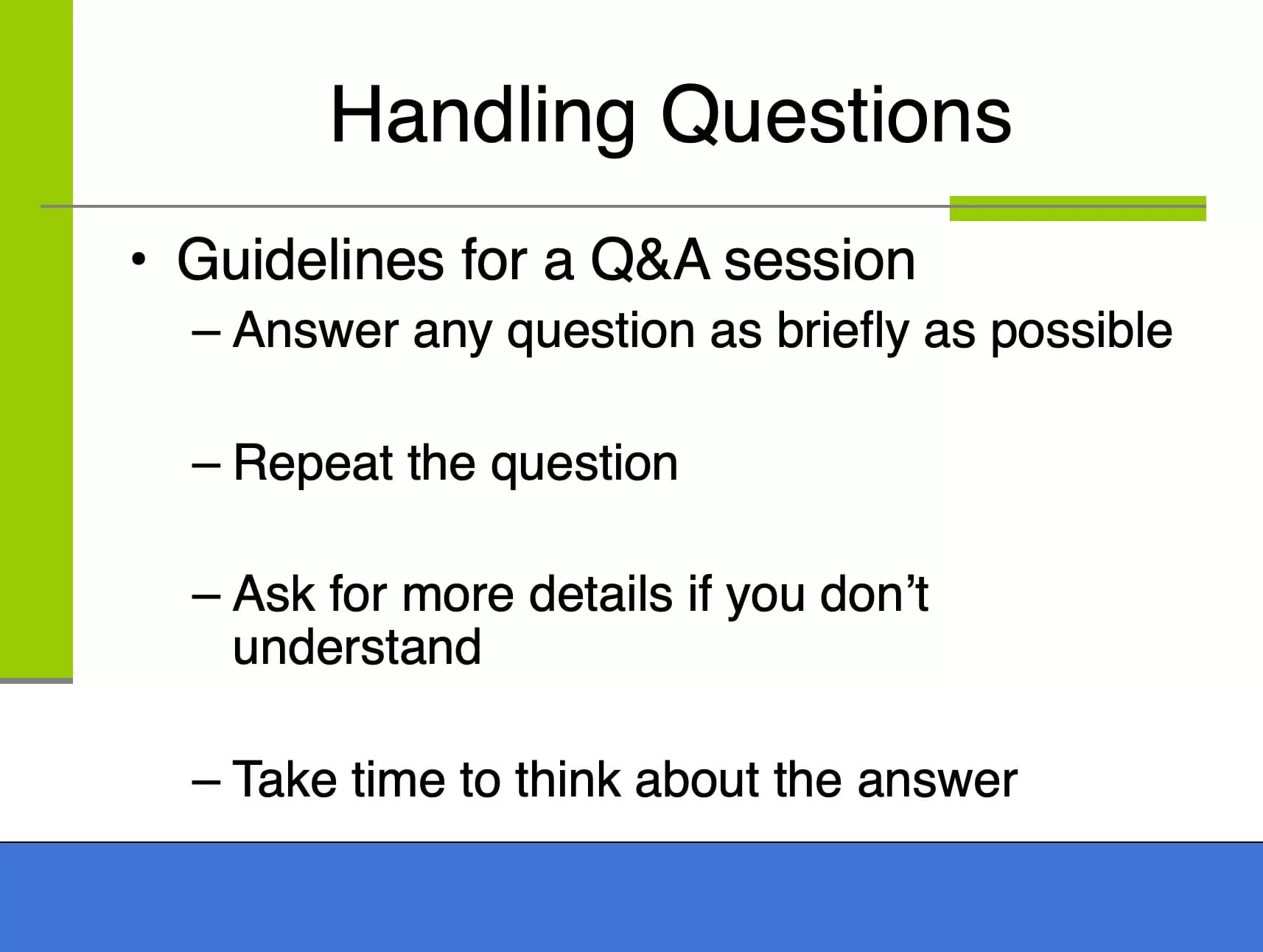
- Handling audience questions – considering approaches to responding clearly and professionally.
- Managing question-and-answer sessions – examining how audience discussions can be incorporated into presentations.
- Handling disruptive audience behavior – exploring constructive responses to heckling, interruptions, or challenging interactions.
Even a carefully prepared presentation may involve unexpected questions, changes in audience engagement, or interruptions.
Presenters may need to balance responding to individual questions with maintaining the overall direction of their presentation.
Trainers can incorporate examples of challenging questions, disagreements, audience interruptions, and requests for clarification to encourage discussion about professional responses.
The emphasis is on maintaining constructive communication, respecting audience members, and responding appropriately to the circumstances.
8. Presenting With Greater Confidence
Examine approaches to beginning a presentation and managing environmental distractions that may affect delivery.
- Starting a presentation – exploring how presenters can establish direction and introduce their message.
- Dealing with noise – considering how environmental distractions and interruptions may influence presentation delivery.
- Developing confident delivery habits – connecting preparation and presentation techniques with greater familiarity and confidence.
The opening moments of a presentation provide an opportunity to establish its purpose, introduce the subject, and begin developing a connection with the audience.
For some presenters, these moments may also be particularly challenging.
Trainers can create opportunities for participants to practice opening statements, introducing presentation topics, and responding to realistic interruptions.
Constructive feedback and repeated practice may help participants become more familiar with their presentation responsibilities and develop their own effective delivery approaches.
9. Understanding Your Audience And Applying Monroe’s Motivated Sequence
Explore audience-focused persuasive communication through Monroe’s Motivated Sequence, a five-stage framework for organizing presentations intended to encourage consideration or action.
- Attention – introduce the subject in a way that captures audience interest.
- Need – establish a relevant problem, requirement, or reason for the audience to consider the message.
- Satisfaction – present a proposed solution or response to the identified need.
- Visualization – help the audience consider potential outcomes associated with acting or not acting.
- Action – communicate a clear and realistic next step that the audience can consider or follow.
Monroe’s Motivated Sequence provides a structured approach to organizing persuasive presentations around the audience’s interests, requirements, and potential decisions.
Rather than presenting a series of disconnected arguments, presenters can explore how attention, need, a proposed solution, potential outcomes, and a call to action can be connected within a purposeful message.
Trainers can incorporate examples of business proposals, workplace improvement recommendations, sales presentations, and management briefings to help participants explore the framework in familiar professional contexts.
Persuasive presentations should be supported by accurate information, realistic expectations, and respect for the audience’s ability to make informed decisions.
This final module brings together presentation preparation, audience understanding, communication techniques, and purposeful delivery.
Free Course Preview.
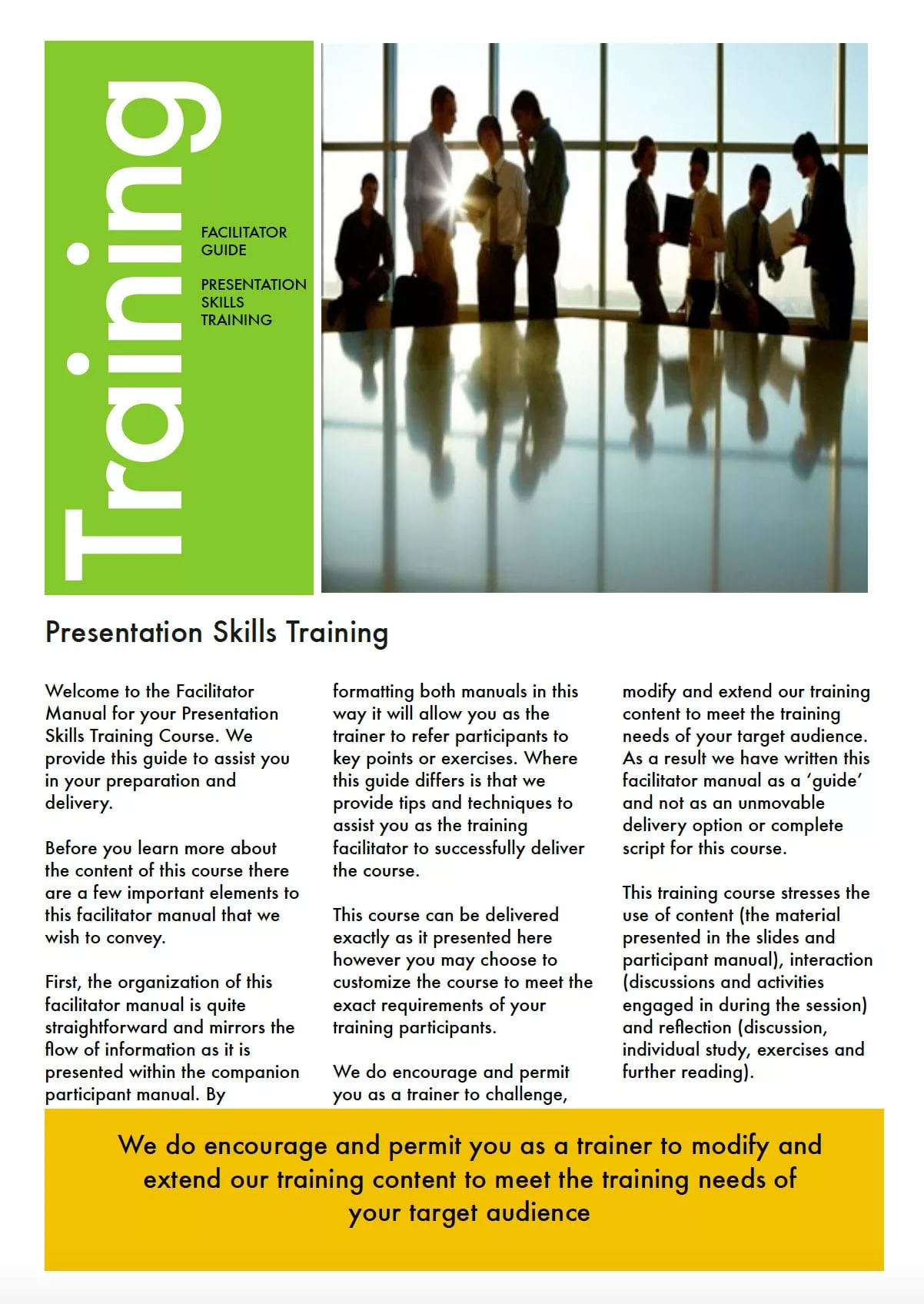
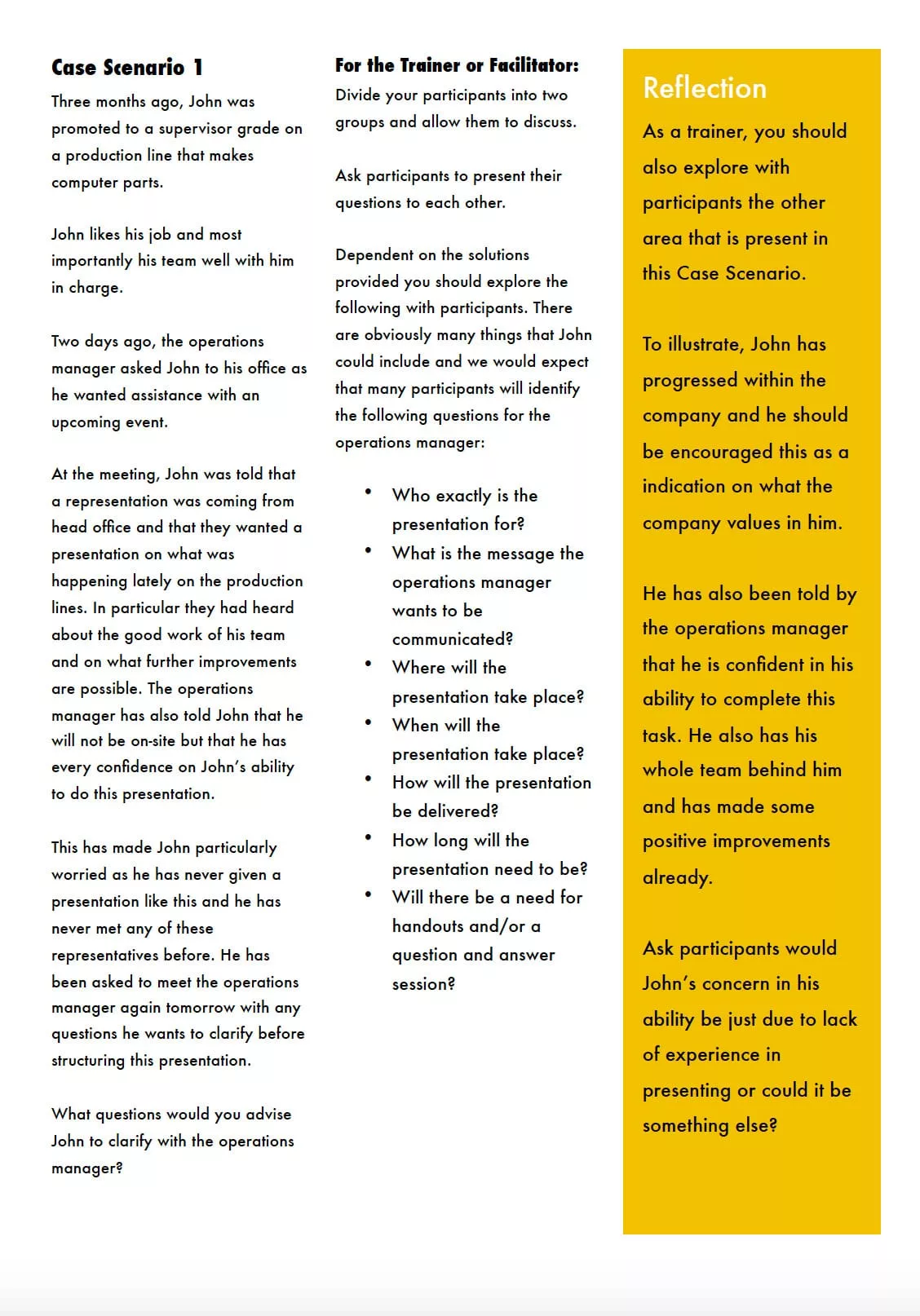
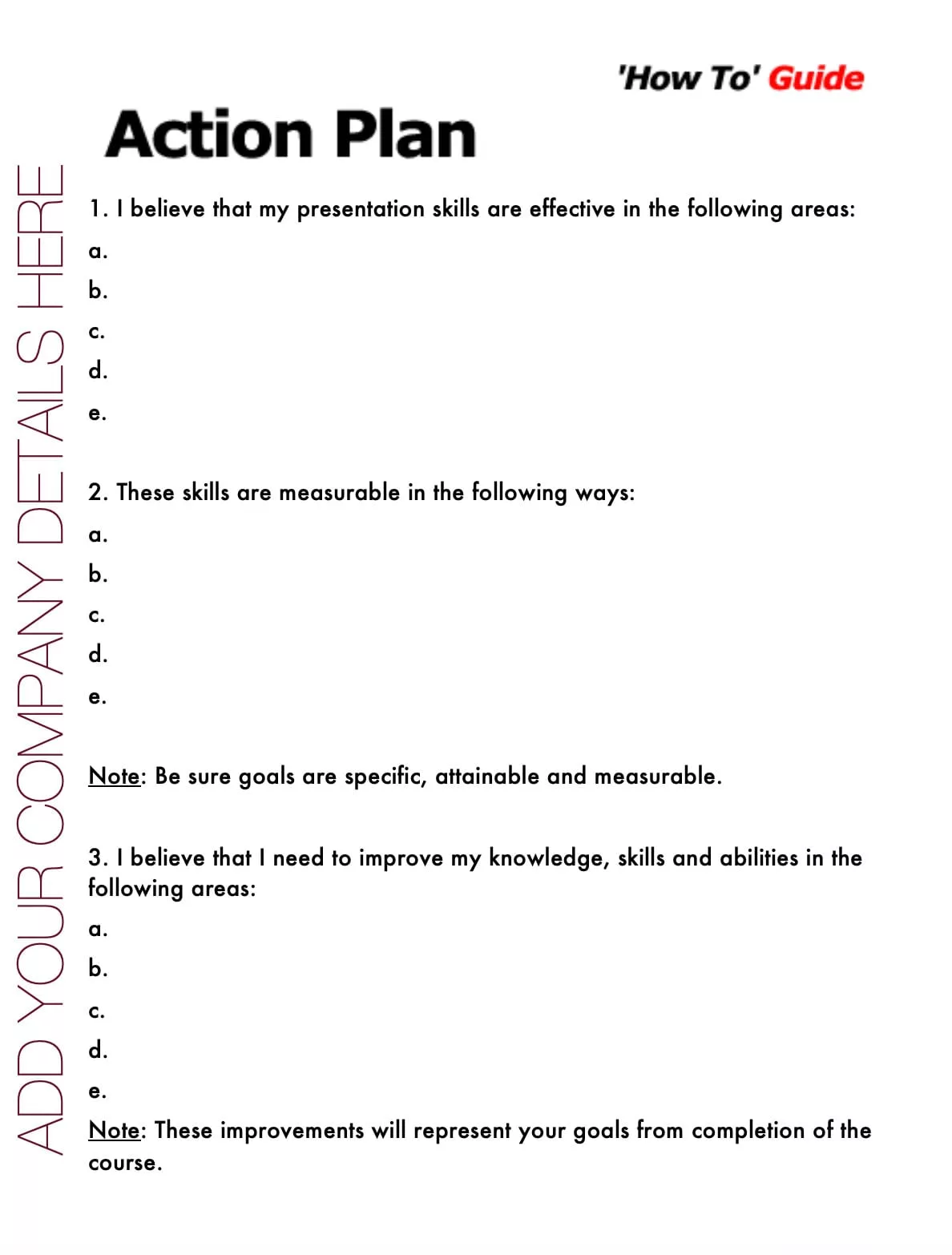
Explore sample presentation materials from the Presentation Skills Training Toolkit before purchasing your complete training package.
We intentionally use generic backgrounds and titles so you can incorporate your own branding, presentation style, professional terminology, and workplace examples.
Who Will Benefit From Your Workshop?
This presentation skills training is suitable for professionals who want to develop their ability to prepare, structure, and deliver presentations in a variety of workplace situations.
- Employees who want to develop greater confidence when presenting ideas and information to colleagues.
- Managers responsible for communicating recommendations, business information, and decisions to teams or senior stakeholders.
- Sales professionals who need to explain product benefits, communicate proposals, and present persuasive messages.
- Project managers who regularly present project updates, recommendations, progress reports, and results.
- Team leaders interested in developing public speaking, presentation structure, and audience engagement skills.
- Technical professionals who need to communicate specialist information to audiences with different levels of subject knowledge.
- Trainers and facilitators seeking to review their own presentation preparation and delivery practices.
- Emerging leaders preparing for responsibilities involving business presentations, formal briefings, and professional communication.
Different Audiences. Different Messages. Make Your Presentation Skills Training Relevant To Both.
A sales professional may need to present a proposal to a prospective customer.
A project manager may need to explain a delay and recommend a revised approach.
A technical specialist may need to communicate complex information to colleagues unfamiliar with the subject.
A newly appointed manager may be preparing to deliver their first presentation to senior leadership.
Each situation requires different considerations regarding presentation purpose, audience expectations, content organization, and delivery.
Oak Innovation’s editable presentation skills courseware gives you the flexibility to connect established communication techniques with the presentation responsibilities and professional challenges familiar to your participants.
- Customize the 37-slide PowerPoint presentation to reflect your participants’ communication and presentation needs.
- Incorporate examples of business presentations, workplace briefings, and professional proposals.
- Adapt the 92-page participant workbook to your audience and learning objectives.
- Use the 17 practical training activities to encourage participation and discussion.
- Incorporate the four bonus scenarios into your workshop where appropriate.
- Connect nonverbal communication concepts with familiar presentation situations.
- Introduce examples of effective visual aids, presentation notes, and supporting handouts.
- Adapt presentation preparation discussions to reflect your organization’s communication requirements.
- Incorporate opportunities to practice opening presentations and responding to audience questions.
- Explore Monroe’s Motivated Sequence through relevant persuasive communication examples.
- Add your own branding to the editable training materials.
- Reuse the training resources for future workshops in accordance with your reuse license.
Whether you’re delivering an in-person presentation skills workshop, facilitating an online learning session, or working with participants who regularly present in hybrid environments, you can adapt the core materials to reflect their communication responsibilities.
Trainers can incorporate their own examples of virtual presentations, remote audience engagement, camera-based communication, and hybrid question-and-answer sessions to connect established presentation principles with contemporary working environments.
You can also adapt practical exercises to accommodate different communication preferences, accessibility requirements, and levels of presentation experience.
Your audience. Your presentation examples. Your professional branding.
Frequently Asked Questions.
What is Oak Innovation's Presentation Skills Training Toolkit?
This is a downloadable, editable professional training package designed to help trainers deliver their own presentation skills workshops. The course covers presentation preparation, communication techniques, visual aids, confident delivery, audience engagement, and persuasive presentation structure across nine core modules.
What is included in the presentation skills training package?
You receive 37 editable PowerPoint slides, a 29-page trainer guide, a 92-page participant workbook, 17 practical training activities, and four bonus scenarios. The complete trainer toolkit is available as an instant digital download.
Who can benefit from presentation skills training?
The training is suitable for employees, managers, sales professionals, project leaders, technical specialists, trainers, and emerging leaders who want to develop their presentation preparation, delivery, and audience communication skills.
Is the presentation skills course suitable for beginners?
Yes. The course introduces presentation fundamentals before exploring more detailed preparation, delivery, audience engagement, and persuasive communication techniques. Trainers can adapt the materials for different levels of presentation experience.
Does the course cover Monroe's Motivated Sequence?
Yes. Participants explore the five stages of Monroe's Motivated Sequence: attention, need, satisfaction, visualization, and action. This framework provides a structured approach to organizing persuasive presentations around audience requirements and potential decisions.
Will participants learn about body language and nonverbal communication?
Yes. The course examines first impressions, nonverbal communication, vocal delivery, facial expressions, visual feedback, and gestures within the context of effective presentation delivery.
Does the training cover difficult audiences and challenging questions?
Yes. Participants explore audience questions, question-and-answer sessions, transitions, interruptions, noise, and disruptive audience behavior. Trainers can incorporate relevant examples to encourage discussion about constructive and professional responses.
Can the materials be adapted for virtual and hybrid presentations?
Yes. Trainers can incorporate their own examples of online presentations, virtual audience engagement, remote communication, and hybrid delivery environments. The core course covers established presentation skills rather than technical training in specific virtual meeting platforms.
Can I customize the presentation skills training materials for my organization or clients?
Yes. The editable white-label courseware allows you to incorporate your own branding, presentation examples, professional terminology, activities, and workplace scenarios. You can adapt the materials to reflect your participants' experience and learning objectives.
Can I reuse the presentation skills training materials and access them immediately?
Yes. The complete trainer toolkit is available as an instant digital download after purchase and can be reused for future workshops in accordance with the terms of your reuse license.
What Trainers Say About Oak Innovation.
★★★★★ “1,000% impressed… Best material I’ve seen, and the price is outstanding.” – Loretta Thirtyacre, COUNTRY Insurance.
★★★★★ “Great value for money — trainers’ notes, slide pack, and delegate workbook all included.” – Pauline Weddell.
★★★★★ “Saved coaches countless hours of program development time for a once-off cost.” – Sylva K. Leduc, SAGE Leaders.
★★★★★ “Purchased the full suite years ago and still refer back—professional and full of info.” – Christy Crump, Crump & Associates.
Prepare With Purpose. Present With Confidence. Communicate With Your Audience In Mind.
The value of a presentation is not determined by the number of slides, the complexity of the information, or the length of time spent speaking.
What matters is whether the audience can understand the message, recognize its relevance, and consider what it means for them.
Oak Innovation’s Presentation Skills Training Toolkit brings presentation preparation, communication techniques, audience engagement, confident delivery, and persuasive presentation structure together in one complete, editable professional training package.
Nine core modules. An established persuasive communication framework. Practical presentation activities. Four bonus scenarios. An extensive participant workbook.
With 37 editable PowerPoint slides, 121 pages of combined trainer and participant resources, and 17 practical training activities, you have a structured starting point for developing your next presentation skills workshop.
Bring your facilitation expertise, communication experience, and understanding of your audience to training resources designed to support your own professional course delivery.
Professional presentation skills courseware. Your branding. Ongoing reuse.
37 editable PowerPoint slides • 29-page trainer guide • 92-page participant workbook • 17 activities • 4 bonus scenarios • Instant download • Reuse license
Help your participants find the right message, develop their delivery skills, and give their audiences a reason to listen.
The Brands That Trust Our Content.






























The Content Behind The Results.
-

Break The Blank Slide Cycle With Our Presentation Skills Training Course
$37.00 - One Payment. Unlimited Reuse. Add to cart -

Break The Blank Slide Cycle With The Interpersonal Skills And Social Intelligence Course
$37.00 - One Payment. Unlimited Reuse. Add to cart -

Buy The Sales Skills Training Course. Make It Yours. Get Out There And Start Teaching It.
$37.00 - One Payment. Unlimited Reuse. Add to cart -

Escape the Course Creation Trap With The Facilitation Training Accelerator Course
$37.00 - One Payment. Unlimited Reuse. Add to cart -

Everything You Need To Run A Workshop On Customer Centricity And Experience (CX) Courseware In One Download
$37.00 - One Payment. Unlimited Reuse. Add to cart -

For Trainers Who Would Rather Be Training Customer Excellence And Conflict De-Escalation Skills
$37.00 - One Payment. Unlimited Reuse. Add to cart -

Professional Training Materials On Conflict Resolution Skills You Can Actually Edit
$37.00 - One Payment. Unlimited Reuse. Add to cart -

Professional Training Materials On Telesales Skills And Remote Selling You Can Actually Edit
$37.00 - One Payment. Unlimited Reuse. Add to cart -

Stop Babysitting Blank PowerPoint Slides On Critical Thinking And Complex Problem Solving Skills
$37.00 - One Payment. Unlimited Reuse. Add to cart -

You Want To Deliver Negotiation Skills Courses, Not Spend Weeks Creating Them
$37.00 - One Payment. Unlimited Reuse. Add to cart -

Your Weekends Weren’t Made For Writing Participant Workbooks On Customer Relationship Management (CRM) Skills
$37.00 - One Payment. Unlimited Reuse. Add to cart