How To Teach A Course On Managing Absenteeism Without Creating Any Content From Scratch.
Note you can teach these customizable materials to explore the causes of absence, improve attendance management and help managers respond to absenteeism more effectively.
Customers tackling absenteeism often find Employee Motivation Skills and Stress Management Skills useful for exploring some of the wider people-management issues involved.
Who Are These Absenteeism Training Materials For?
These ready-to-use training course materials are used by corporate trainers, independent consultants, HR professionals, educators, and people managers.
What’s Covered In This Absenteeism Training Course Material?
1. Understanding absenteeism
- What is absenteeism?
- The costs of employee absences.
- Different types and causes of employee absenteeism.
- Three leading causes of employee absenteeism.
2. Do you have an absenteeism problem?
- Key factors.
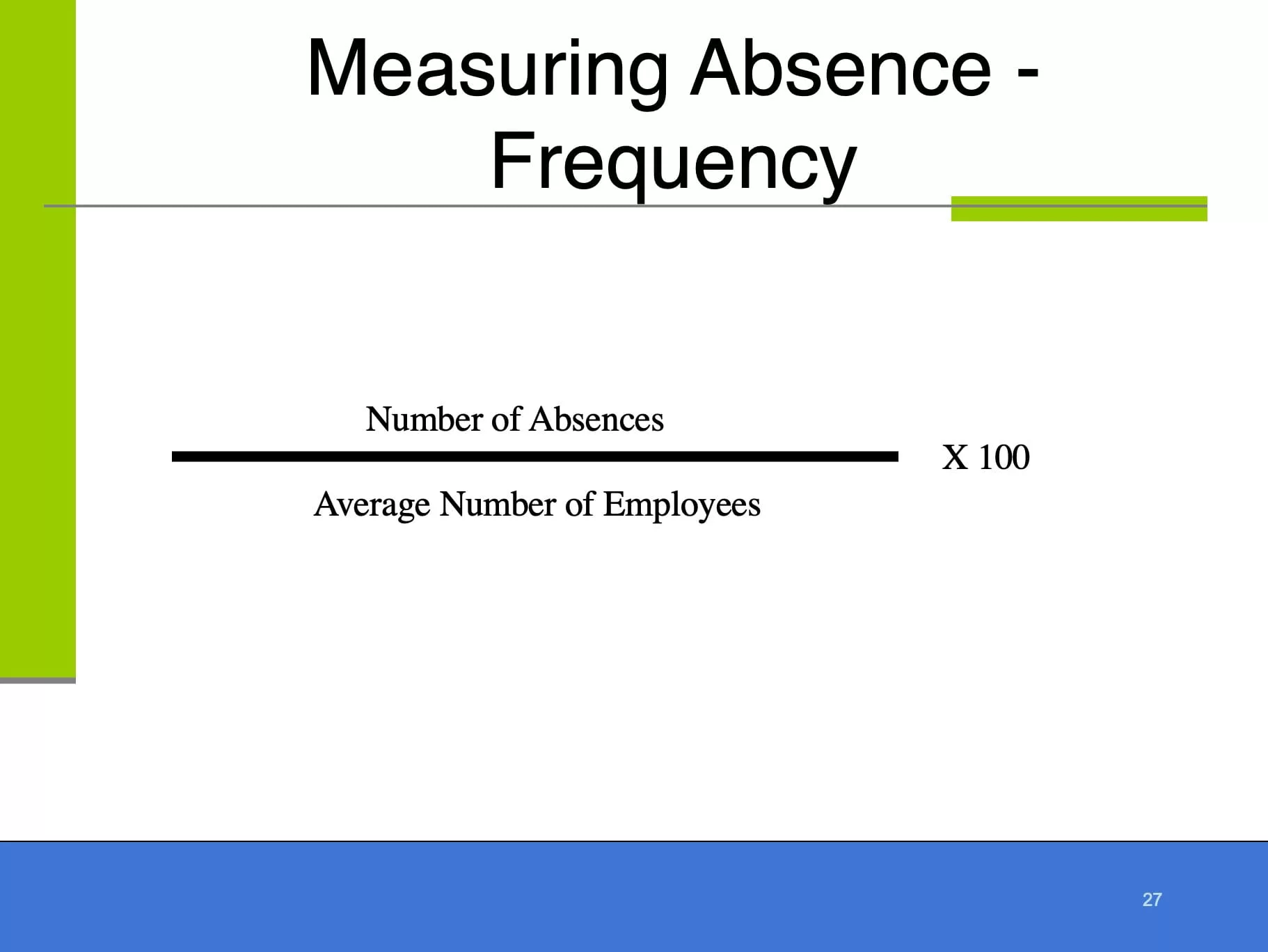
3. How to measure employee absenteeism
- Absenteeism and measurement within companies.
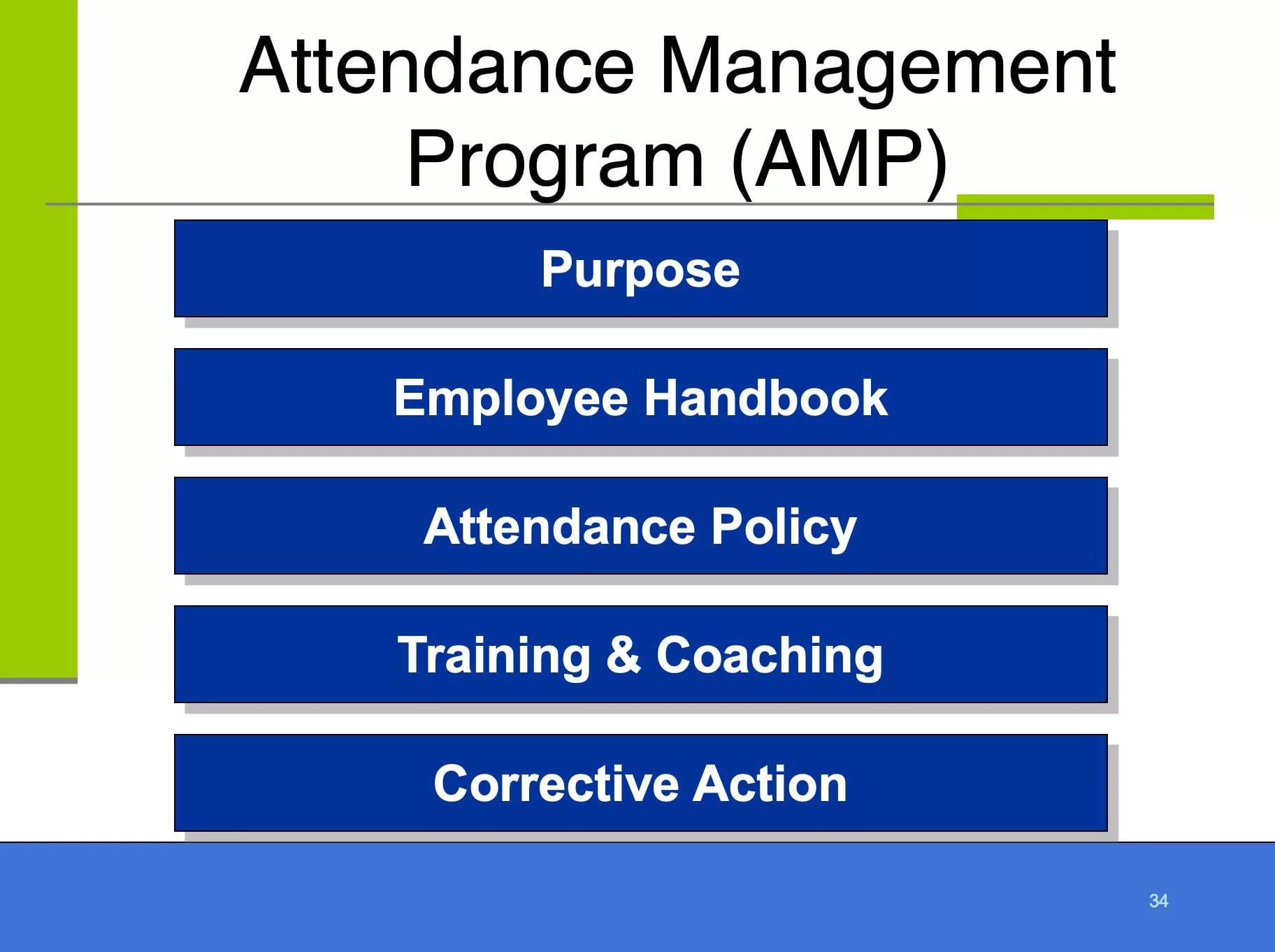
4. Five interventions to reduce absenteeism in the workplace.
-
Helping participants appreciate employee handbooks.
- Employee handbooks.
- Attendance policies.
- The impact of training and development.
- The role of coaching.
- Corrective action.
Free Reducing Absenteeism Workshop Preview.
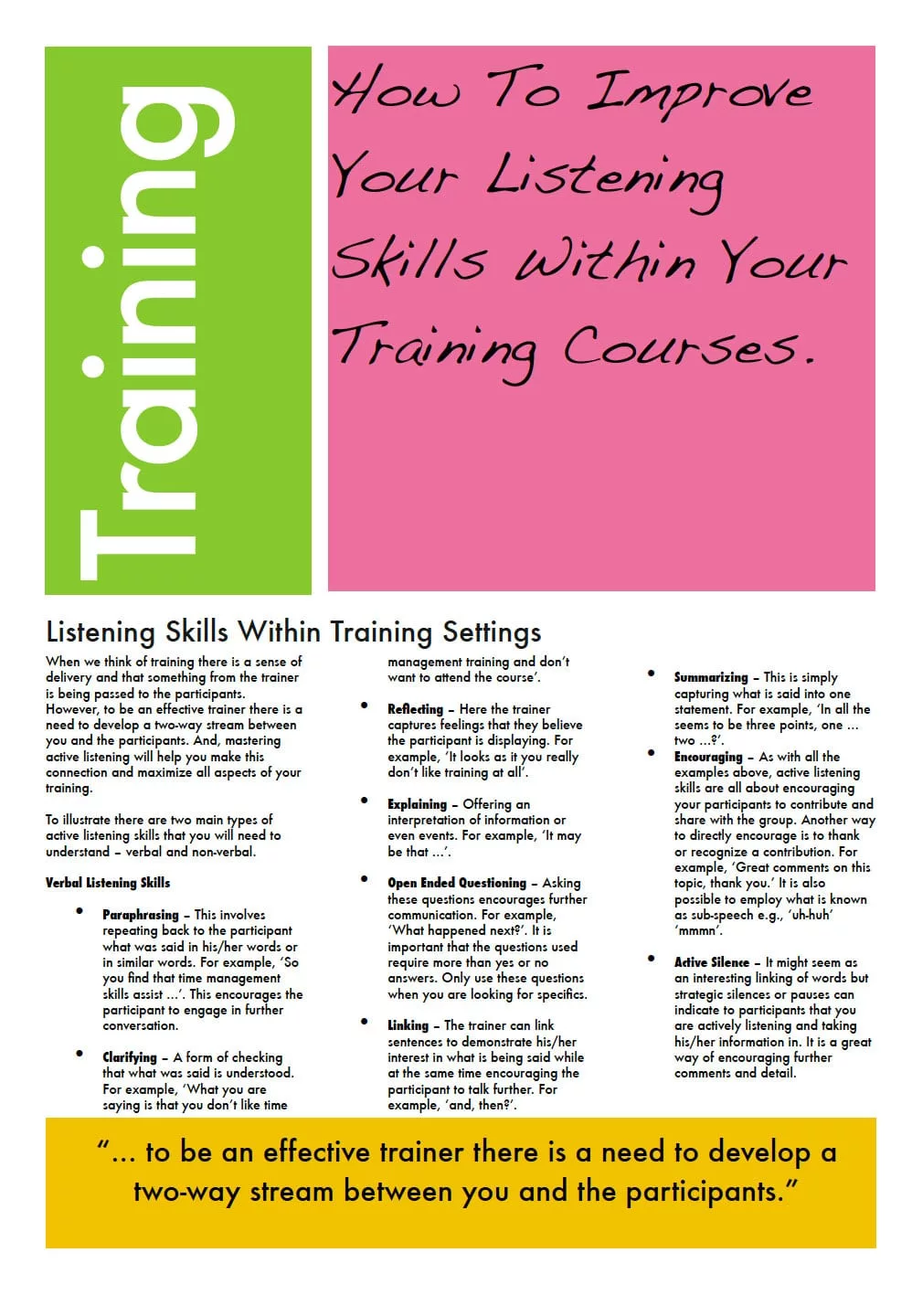
Below are sample materials from this course.
We intentionally use generic backgrounds and titles, so you can easily rebrand and customize everything as your own.
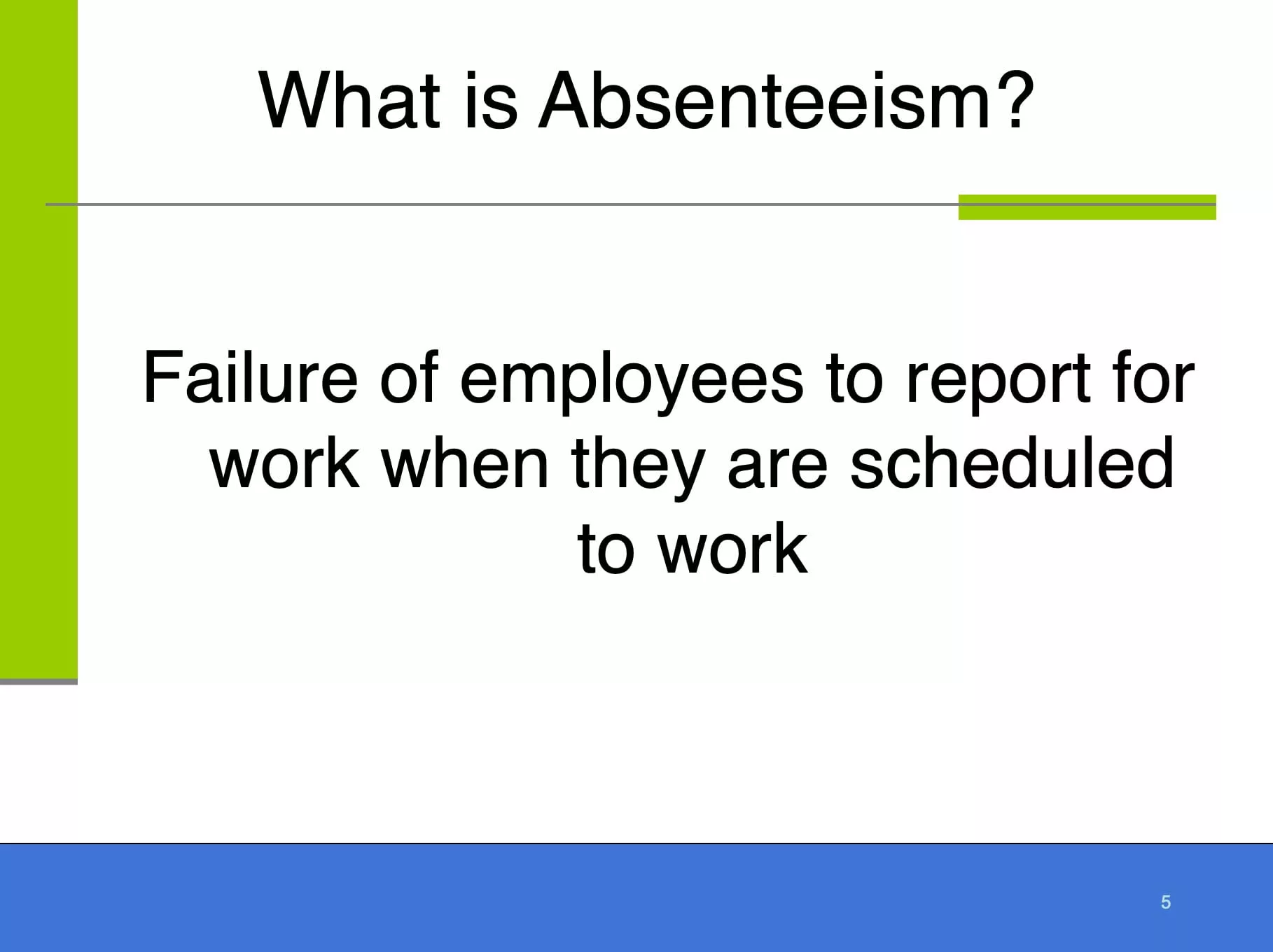
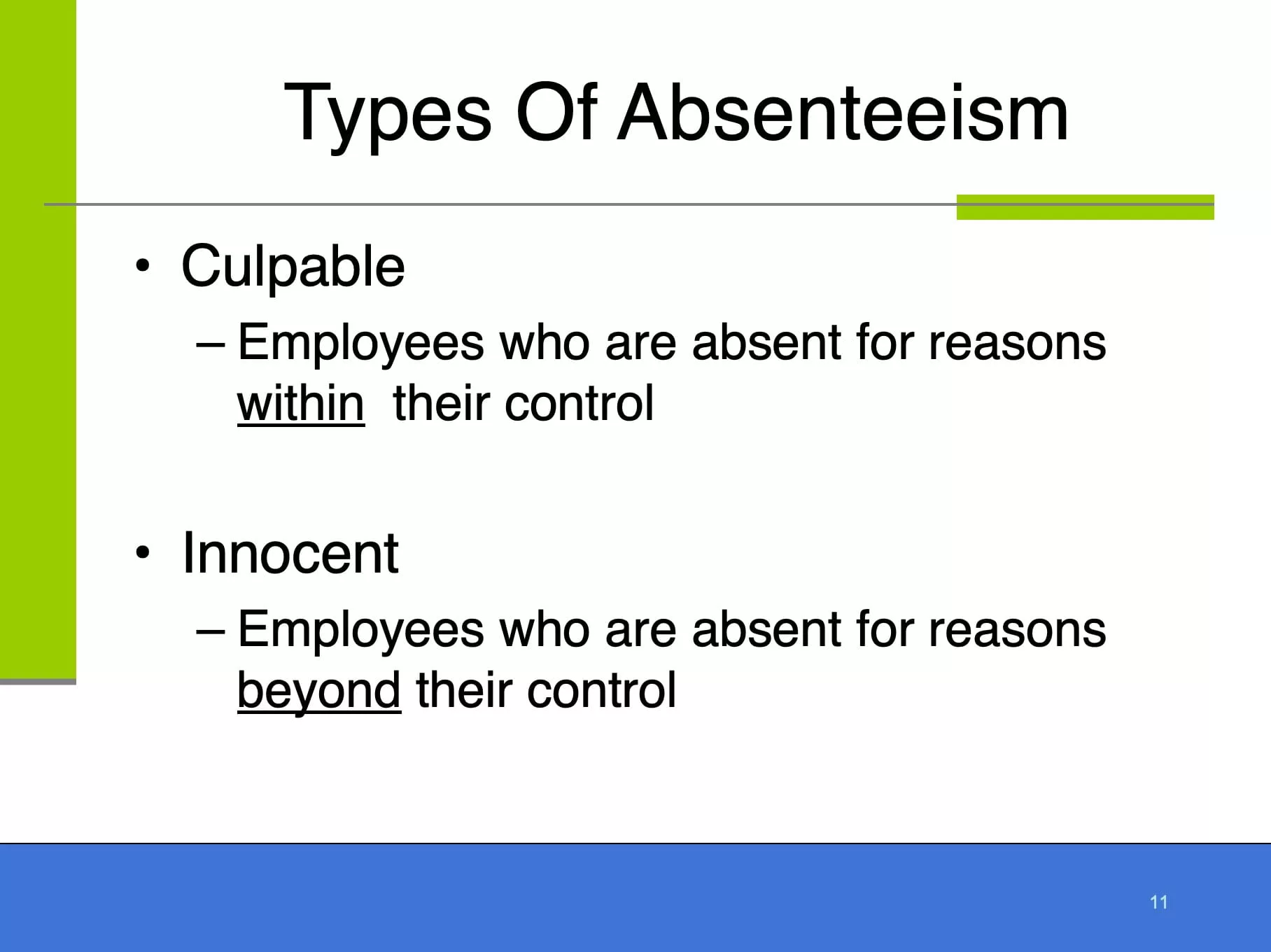


No subscriptions. No recurring fees. No attribution required.
What Trainers Actually Say.
★★★★★ “Well-structured series relevant to today’s HR professionals. Information is well-organized and easy to understand.” – Bernard Cronin, Director of HR, Apple.
★★★★★ “The content is incredibly relevant, well-structured, and grounded in sound training principles.” – James L. Steward.
★★★★★ “Very comprehensive. Support tools provided were impressive. Notes for facilitator were simple and easy to follow.” – Tracey O’Shea, Leadership Development, Forest Laboratories.
★★★★★ “As a trainer, I appreciate the trainer background materials so I can study the details and background.” – Andrea Chisholm, Critical Success Consulting.
Frequently Asked Questions.
What is Absenteeism Management?
Absenteeism Management is the process of monitoring attendance, identifying absence patterns, addressing attendance concerns, and implementing strategies that improve employee attendance and workplace productivity. Effective attendance management helps organizations reduce unplanned absences while supporting employee wellbeing and maintaining operational performance.
What causes high absenteeism in the workplace?
Common causes include employee disengagement, stress, burnout, poor management practices, workload pressures, workplace culture issues, health concerns, and low job satisfaction. Understanding the underlying causes allows managers to address attendance issues proactively rather than simply responding to repeated absences.
Who should attend Absenteeism Management training?
Absenteeism Management training is designed for managers, supervisors, team leaders, and HR professionals, and anyone responsible for employee attendance management. It is also valuable for business leaders who want to improve attendance, employee engagement, and workforce productivity.
What should a complete Absenteeism Management training program include?
A comprehensive Absenteeism Management course should include presentation slides, an instructor guide, participant workbook, and practical workplace activities. Quality materials also provide facilitator guidance, discussion exercises, attendance management frameworks, workplace scenarios, and action planning resources.
Are Absenteeism Management training materials editable and rebrandable?
Yes. Slides, participant workbooks, and instructor guides should all be supplied in editable formats. You can add your own branding, organizational terminology, attendance procedures, and workplace examples to make the training more relevant to your audience or clients.
Is Absenteeism Management training focused only on discipline?
No. Effective Absenteeism Management focuses on early intervention, supportive conversations, practical problem solving, and helping employees maintain consistent attendance. It is a general management skills program rather than jurisdiction-specific legal or HR compliance training.
Can Absenteeism Management training materials be reused with different teams or clients?
Yes. Editable training materials can be delivered repeatedly across different teams, departments, organizations, and client groups. Many facilitators tailor workplace examples while keeping the core attendance management principles consistent.
Do you need HR experience to teach Absenteeism Management?
No. A comprehensive instructor guide provides clear step-by-step facilitation notes, delivery guidance, discussion prompts, and activity instructions throughout the course. This enables both experienced facilitators and first-time trainers to confidently deliver structured Absenteeism Management workshops.
How quickly can you prepare and deliver Absenteeism Management training?
Most facilitators customize professional training materials in 30 to 60 minutes and deliver the workshop the same week. Preparation usually involves adding branding, reviewing facilitator notes, selecting relevant workplace scenarios, and tailoring activities to the audience.
Can you teach Absenteeism Management without previous facilitation experience?
Yes. A comprehensive instructor guide provides step-by-step instructions, facilitation guidance, and practical advice for managing attendance discussions and difficult workplace conversations. Even first-time trainers can confidently deliver engaging Absenteeism Management workshops using professionally developed training materials.
50 slides • 61-page guide • 49-page workbook • 17 activities • Instant download • Use forever
Organizations That Have Downloaded Oak Innovation Training Materials.


































Explore More Human Resource Management Training Materials.
Expand your human resource development program with editable courses covering specialist human resource management skills.
-

360 Degree Feedback Skills
$80.00 - Full Toolkit Add to cart -

Competency Skills
$80.00 - Full Toolkit Add to cart -

How To Reduce Employee Absenteeism
$80.00 - Full Toolkit Add to cart -

HR Skills
$80.00 - Full Toolkit Add to cart -

Interviewing Skills
$80.00 - Full Toolkit Add to cart -

Job Analysis Skills
$80.00 - Full Toolkit Add to cart -

Job Design Skills
$80.00 - Full Toolkit Add to cart -

Performance Appraisal Skills
$80.00 - Full Toolkit Add to cart -

Recruitment Skills
$80.00 - Full Toolkit Add to cart -

Training Needs Analysis Skills
$80.00 - Full Toolkit Add to cart

Meet Catherine, the passionate mind behind Oak Innovation. For more than 30 years, she’s been creating practical, engaging courses that help trainers, L&D professionals, managers, and consultants save valuable preparation time. Her goal is simple: make course creation easier, so you can spend less time preparing and more time delivering great training.