The Way Work Is Designed Matters. To Your People And Your Organization.
An employee feels underutilized. A manager struggles to distribute responsibilities effectively. A team performs repetitive tasks with limited opportunities to develop new capabilities.
Sometimes, the challenge lies not only with the people performing the work but with the way the work itself is organized.
Job design explores how tasks, responsibilities, working arrangements, and role requirements can be structured to support organizational needs and the people carrying out the work.
It brings together important considerations relating to job-person fit, employee performance, job satisfaction, resource utilization, and the wider employee experience.
For trainers, developing a job design workshop requires connecting established management theories with practical questions about how work is organized within different workplaces.
Researching job design approaches, preparing presentations, writing facilitator guidance, and developing participant resources can take considerable preparation time.
Oak Innovation’s professional editable job design skills training courseware gives you a structured foundation for delivering this training without developing every resource from scratch.
You receive 61 editable PowerPoint slides, a 46-page trainer guide, a 39-page participant workbook, and 17 practical training activities.
Across two core modules, participants explore the foundations of job design, job-person fit, performance, job satisfaction, and established approaches to organizing and redesigning work.
The course examines job enlargement, job enrichment, scientific management, job characteristics theory, critical psychological states, and alternative work schedules.
With the course content already prepared, you can concentrate on the job roles, organizational challenges, working arrangements, and management responsibilities familiar to your participants.
Download the complete training package, adapt the materials to your organization or the needs of your clients, and deliver job design skills training under your own branding.
Focus your workshop on how work could be organized differently rather than spending your preparation time building another course from scratch.
Developing a broader HR or organizational development training program? Complement this course with our dedicated training materials on job analysis skills to explore how understanding job responsibilities and requirements can inform decisions about the design of work.
Trusted By Training Professionals Who Develop People And Organizations.




































Who Are These Job Design Training Materials For?
These editable job design training resources are designed for professionals who want to deliver structured workshops on job design principles, role development, work organization, employee performance, and job satisfaction.
- Corporate trainers delivering workshops on job design, human resource management, and organizational development.
- HR and learning and development professionals supporting role development, employee capabilities, and management development initiatives.
- Independent trainers and training consultants preparing customized job design workshops for their clients.
- Managers and HR leaders responsible for developing capabilities relating to work organization, role responsibilities, and job design.
- Educators and facilitators delivering professional development sessions on job design, management theories, and human resource management.
Whether you’re introducing job design principles to new HR practitioners, helping managers explore different ways of organizing work, or supporting experienced professionals involved in organizational development, you can adapt the materials to reflect your participants’ responsibilities and learning needs.
Learning Objectives.
By the end of your job design skills workshop, participants will be able to:
- Explain the purpose and fundamental principles of job design.
- Understand the process of designing and redesigning jobs.
- Recognize potential obstacles to effective job design.
- Identify the potential advantages of effective job design.
- Understand the concept of job-person fit and its relevance to role requirements.
- Explore the relationship between job design, employee performance, and job satisfaction.
- Recognize how job design can influence the utilization of internal organizational resources.
- Consider the relationship between job design, employee absenteeism, and turnover.
- Explore established approaches to job design, including job enlargement, job enrichment, and scientific management.
- Understand the relevance of job characteristics theory and critical psychological states.
- Consider the role of alternative work schedules within job design.
- Explore how job design principles can be applied to familiar organizational roles and workplace challenges.
What’s Covered.
The courseware covers two core areas of job design, from understanding its purpose and potential organizational benefits to exploring established theories, management approaches, and alternative ways of organizing work.
1. Understanding Job Design And Its Organizational Importance
Introduce participants to the foundations of job design and explore how the structure of work can influence employee experiences, role requirements, organizational resources, and performance.
This module examines nine important job design topics:
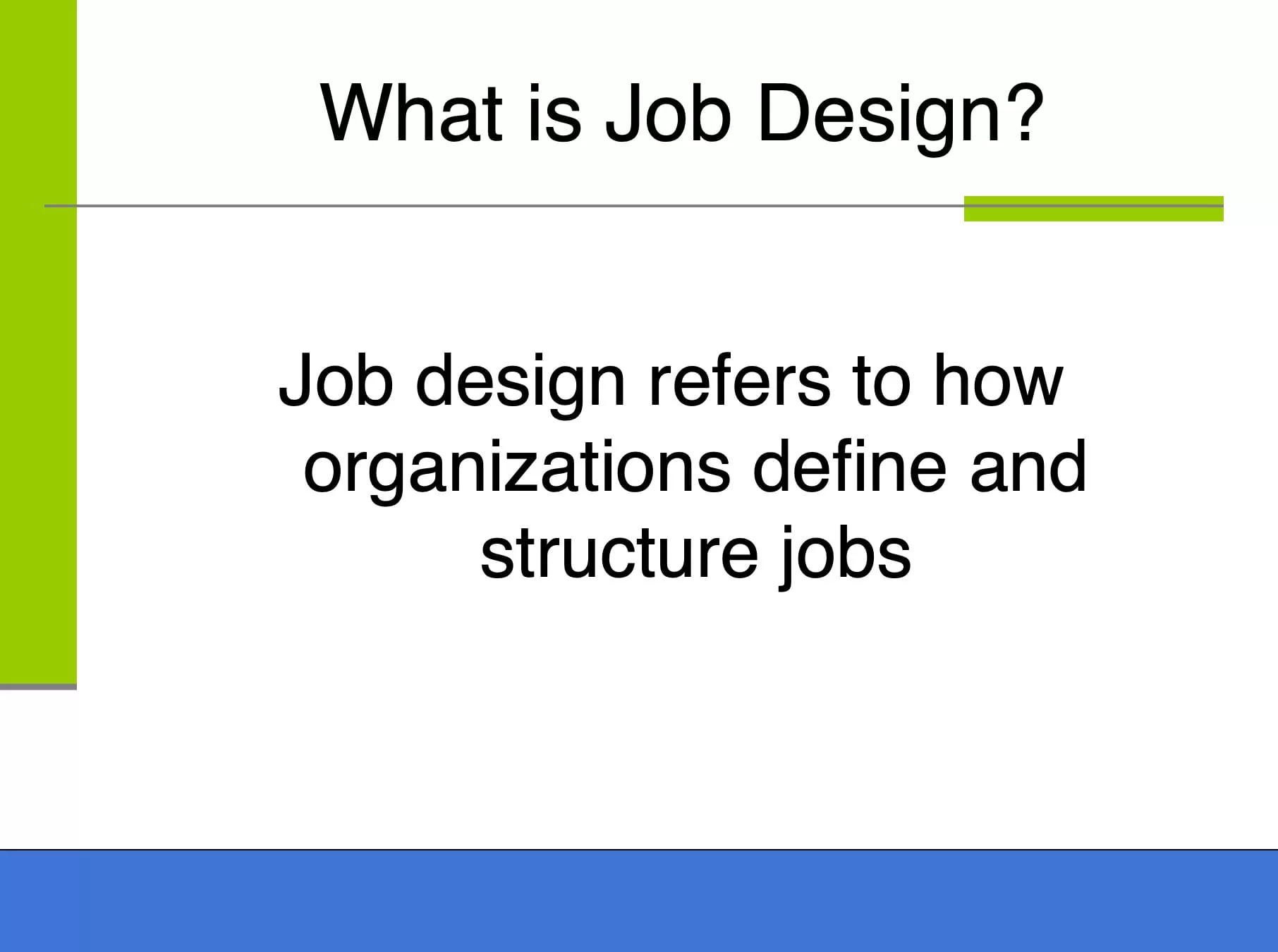
- What is job design? Explore the purpose of organizing tasks, responsibilities, and working arrangements within a job.
- Completing a job design. Examine the considerations involved in designing or reviewing the structure of a role.
- Overcoming obstacles to job design. Recognize potential barriers that may influence job design decisions and implementation.
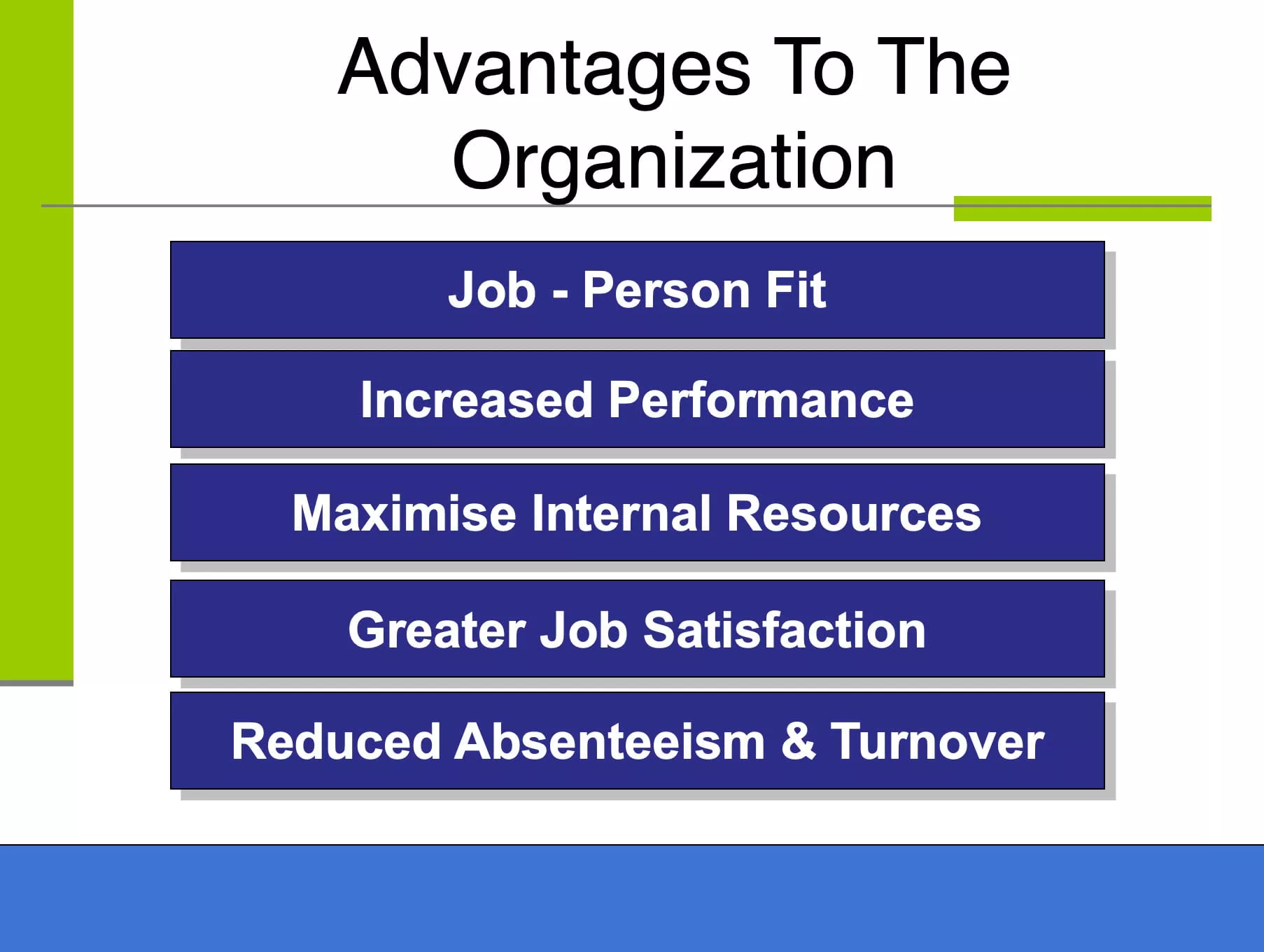
- The advantages of effective job design. Explore how the organization of work can support employee and organizational requirements.
- Job-person fit. Consider the relationship between the requirements of a job and the capabilities, characteristics, and needs of the person performing it.
- Understanding performance. Examine the relevance of job design to employee responsibilities, expectations, and performance.
- Maximizing internal resources. Consider how the organization of work can influence the utilization of existing organizational capabilities and resources.
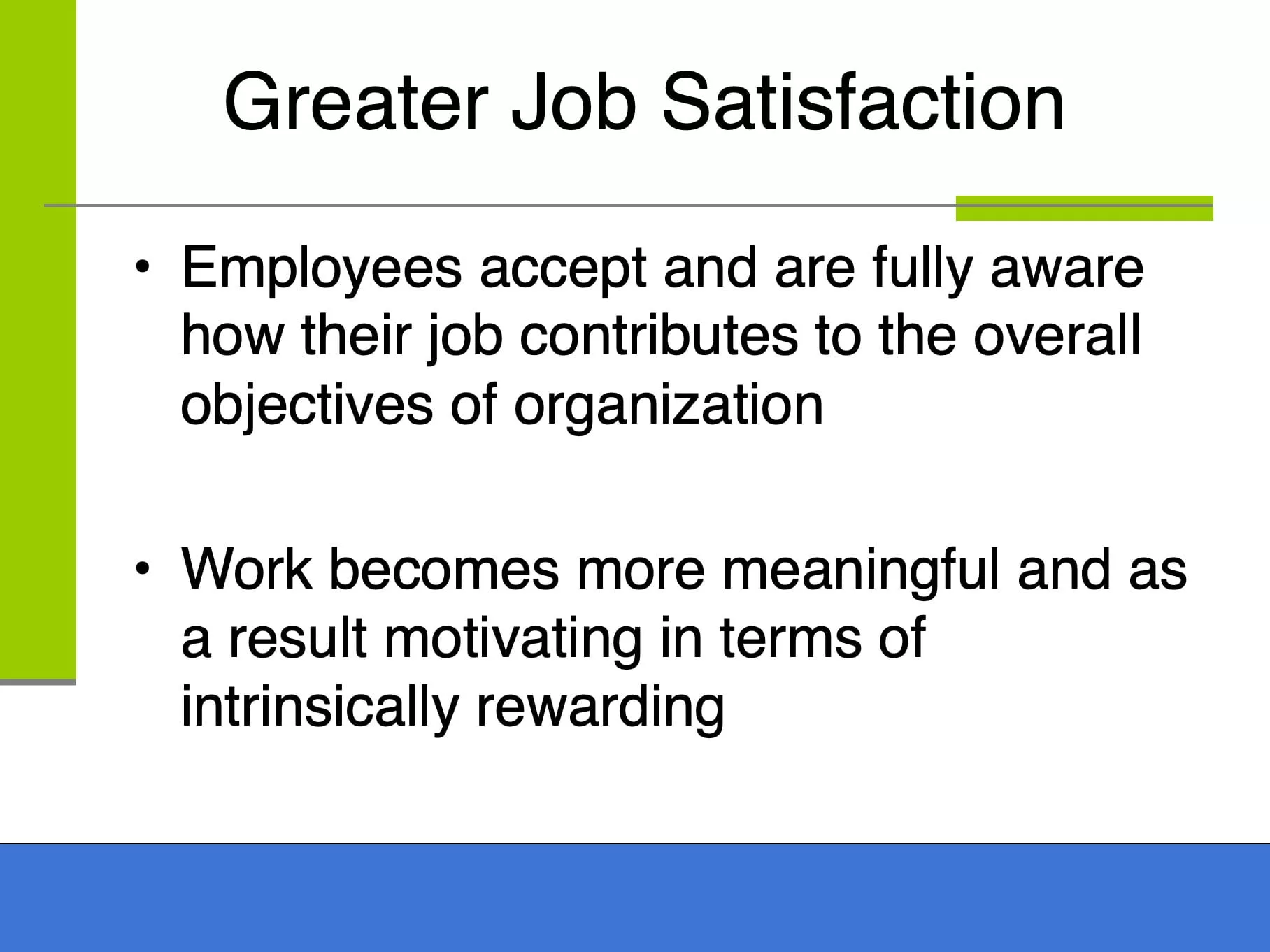
- Understanding job satisfaction. Explore how different characteristics of a job may influence employees’ experiences of their work.
- Absenteeism and employee turnover. Consider how job design may contribute to attendance, employee retention, and wider workforce experiences.
These nine topics provide a foundation for discussing why job design involves more than allocating tasks or preparing a written job description.
Participants can consider how role requirements, working conditions, employee capabilities, and organizational priorities interact when designing or reviewing jobs.
Trainers can incorporate examples of existing roles, changing responsibilities, and workplace challenges to help participants connect these concepts with familiar organizational situations.
2. Established Approaches, Theories, And Techniques In Job Design
Explore different perspectives on how work can be organized and how job design decisions may influence employee experiences, organizational efficiency, and performance.
The course examines a range of established job design approaches and related concepts:
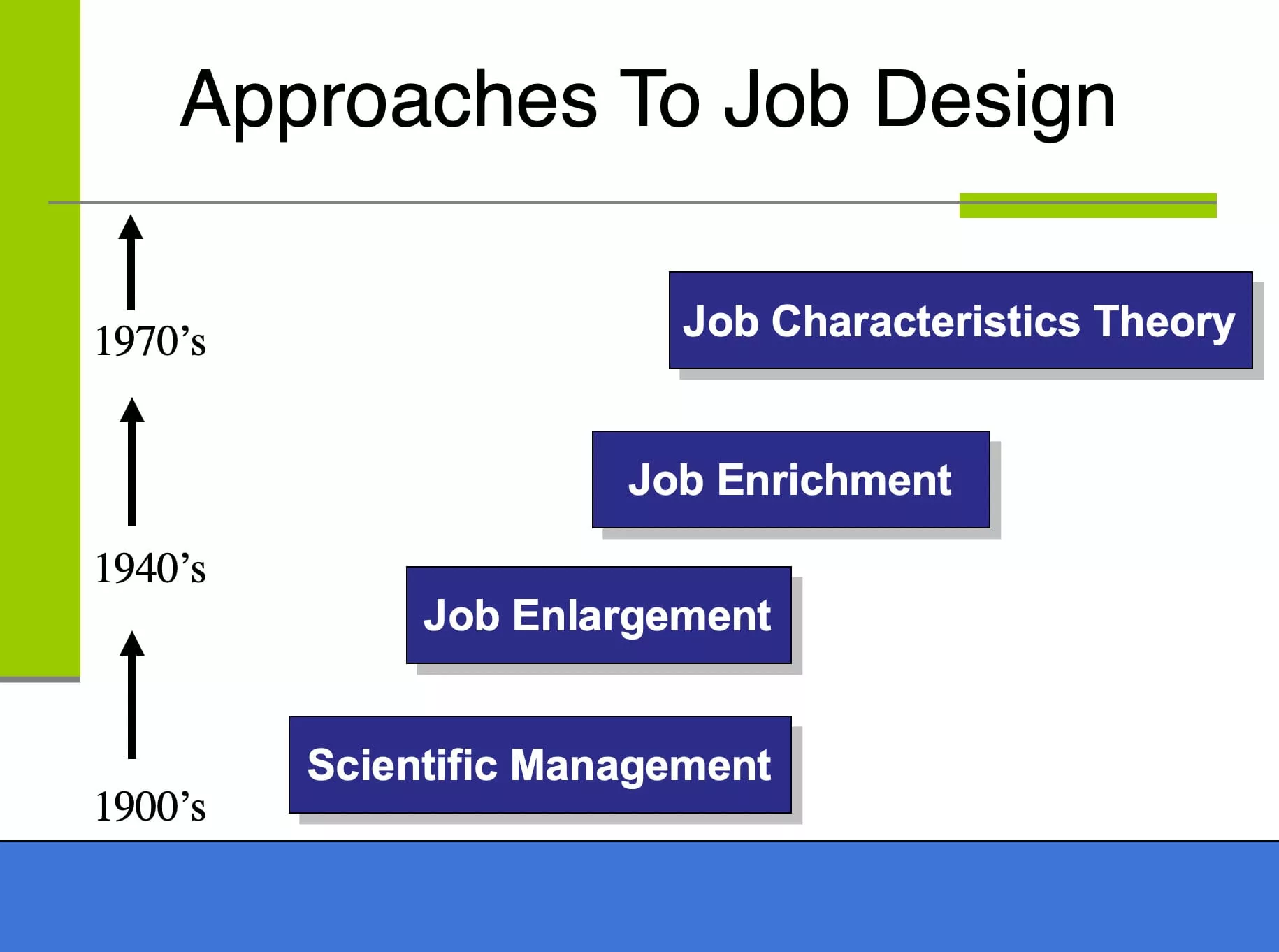
- Job enlargement – exploring how increasing the range of tasks within a role can influence the variety of work performed.
- Scientific management – examining approaches that emphasize the systematic organization of work and operational efficiency.
- Job enrichment – considering how greater responsibility, autonomy, and opportunities for meaningful contribution can influence the experience of work.
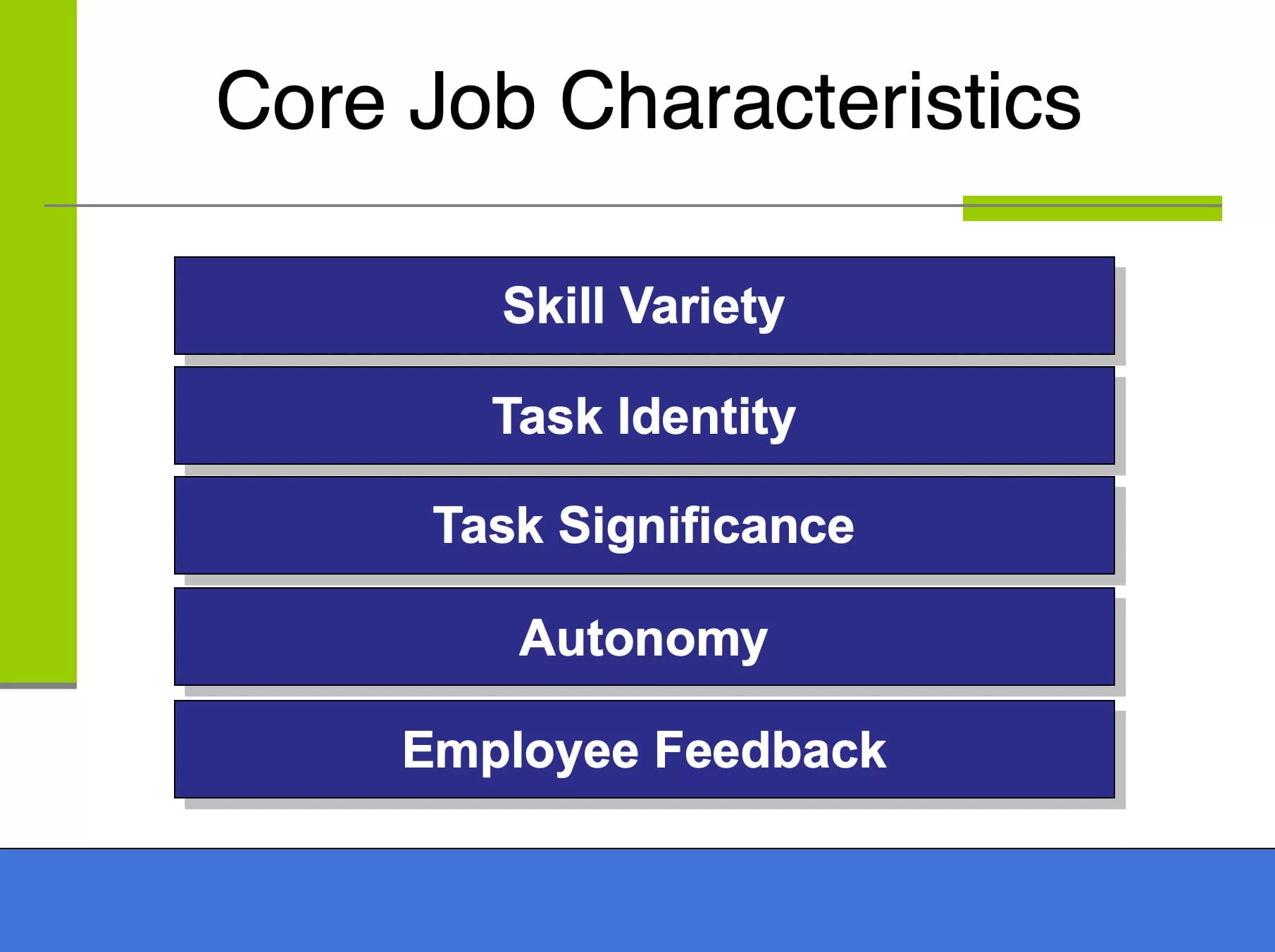
- Job characteristics theory – exploring how different characteristics of a job may influence employee motivation, satisfaction, and work-related outcomes.
- Management theories related to job design – examining different management perspectives on organizing work and structuring employee responsibilities.
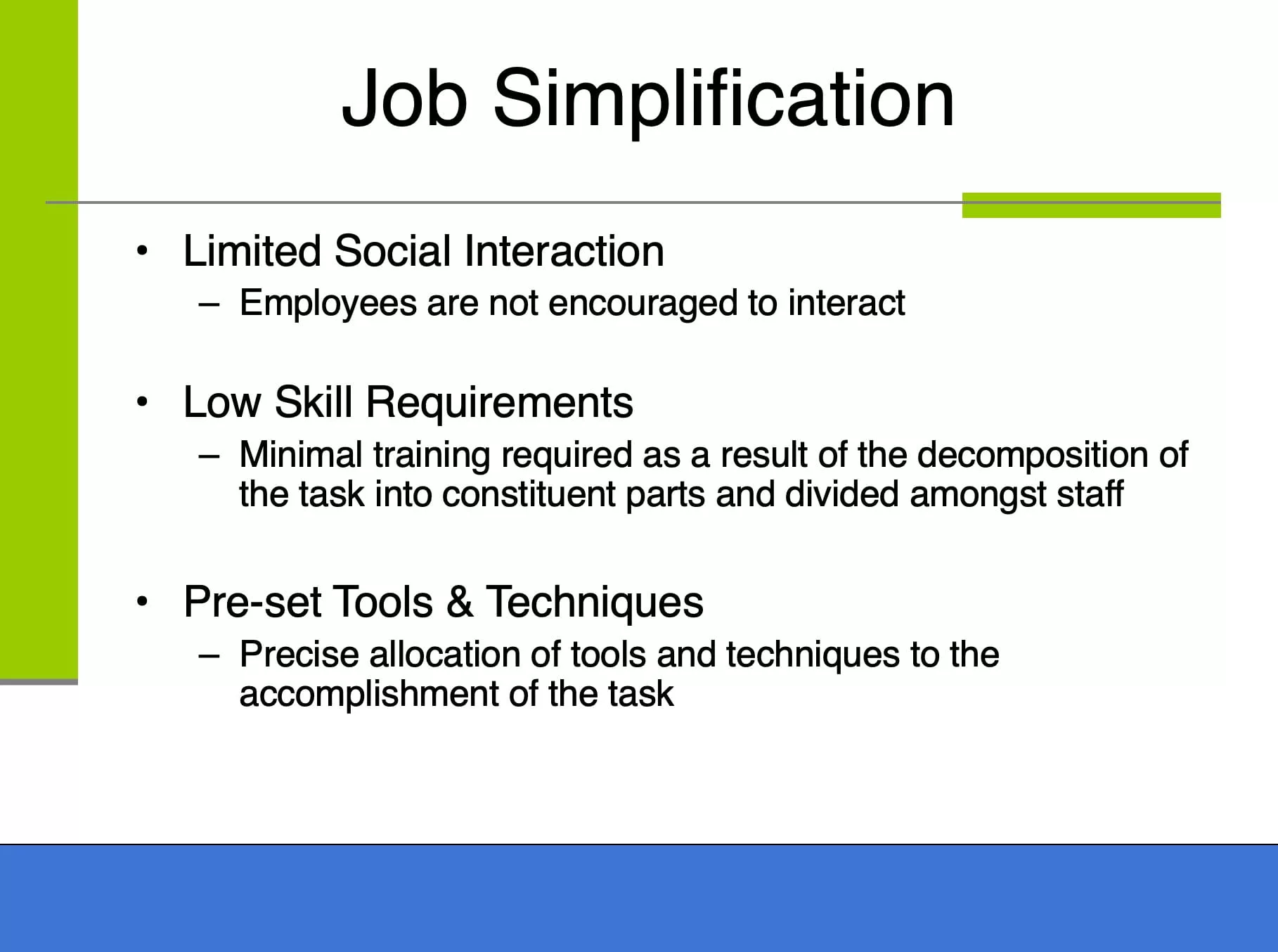
- Job simplification – exploring approaches to reducing the complexity of work tasks and considering the implications for employees and organizations.
- Critical psychological states – considering the psychological experiences associated with different characteristics of work.
- Alternative work schedules – exploring how different working arrangements can influence the organization and experience of work.
This section provides a foundation for examining the different considerations involved in selecting a job design approach.
For example, increasing the variety of tasks within a role may create different opportunities and challenges from increasing employee autonomy or reviewing how work is scheduled.
Similarly, approaches that emphasize efficiency may involve different considerations from approaches that emphasize employee development, responsibility, or job satisfaction.
Rather than presenting one job design approach as appropriate for every situation, trainers can encourage participants to consider the nature of the work, employee requirements, organizational resources, and wider business priorities.
Participants can explore how different job design concepts might relate to existing roles, changing responsibilities, or opportunities to reorganize work within their own organizations.
Free Course Preview.
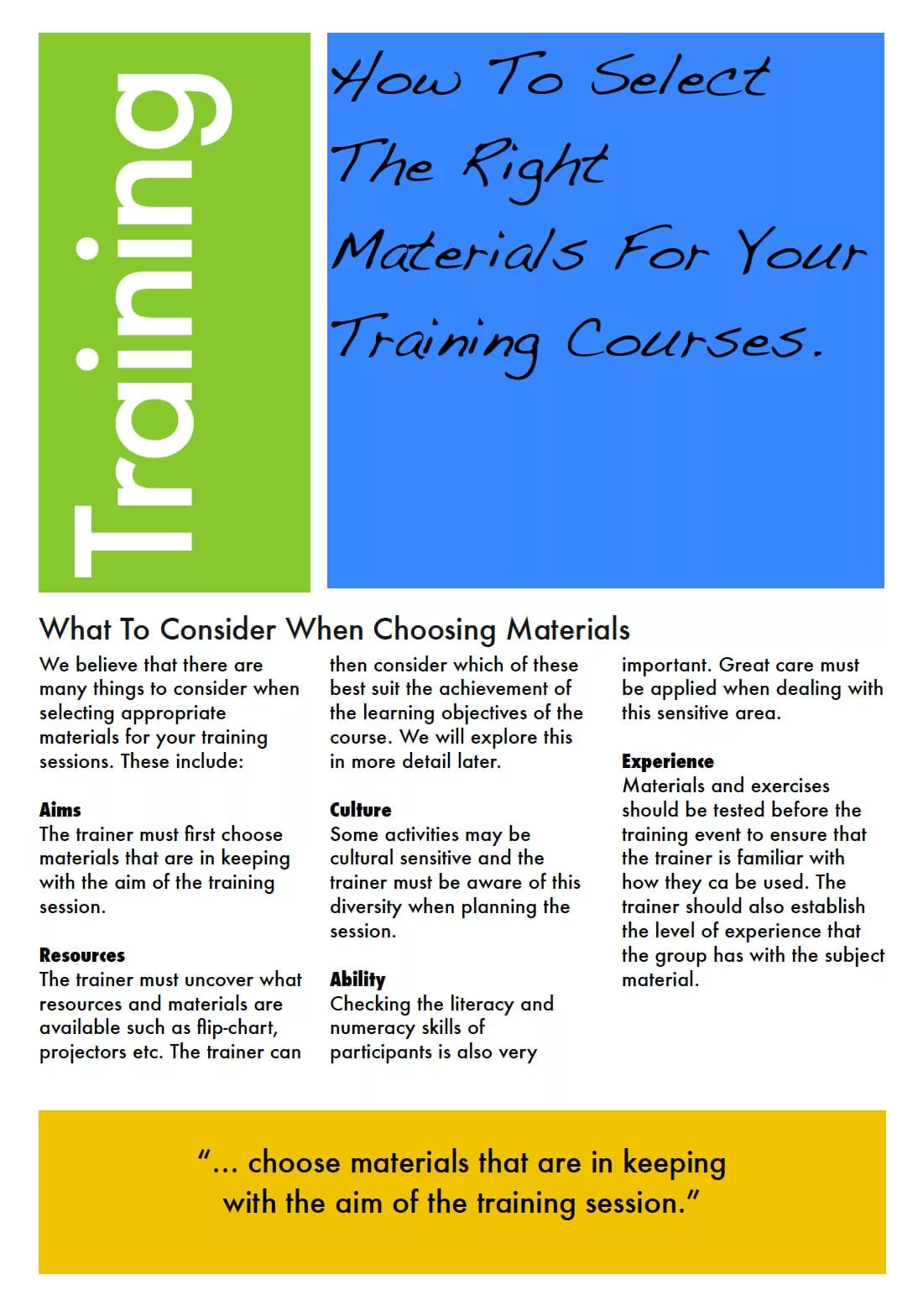
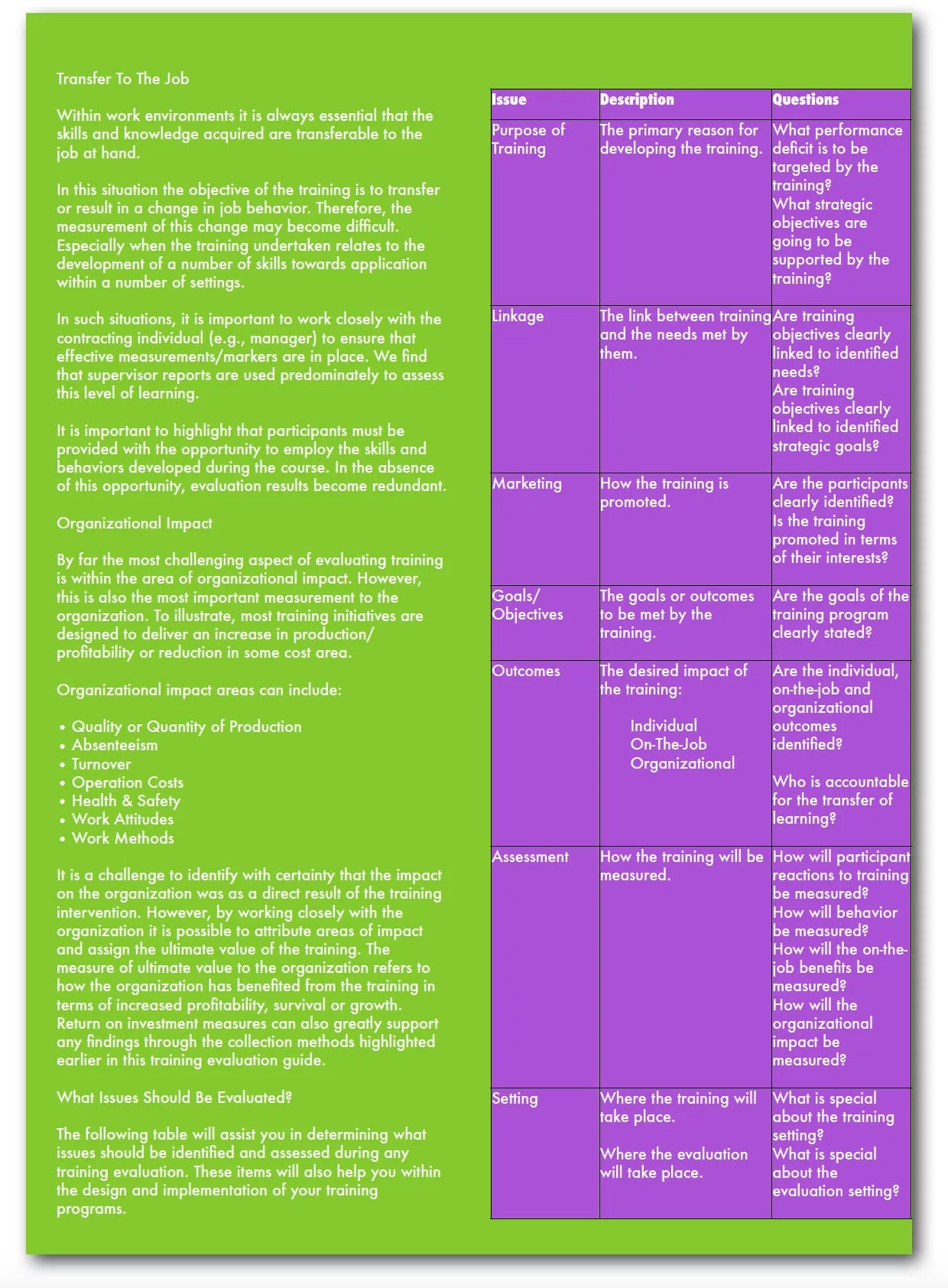
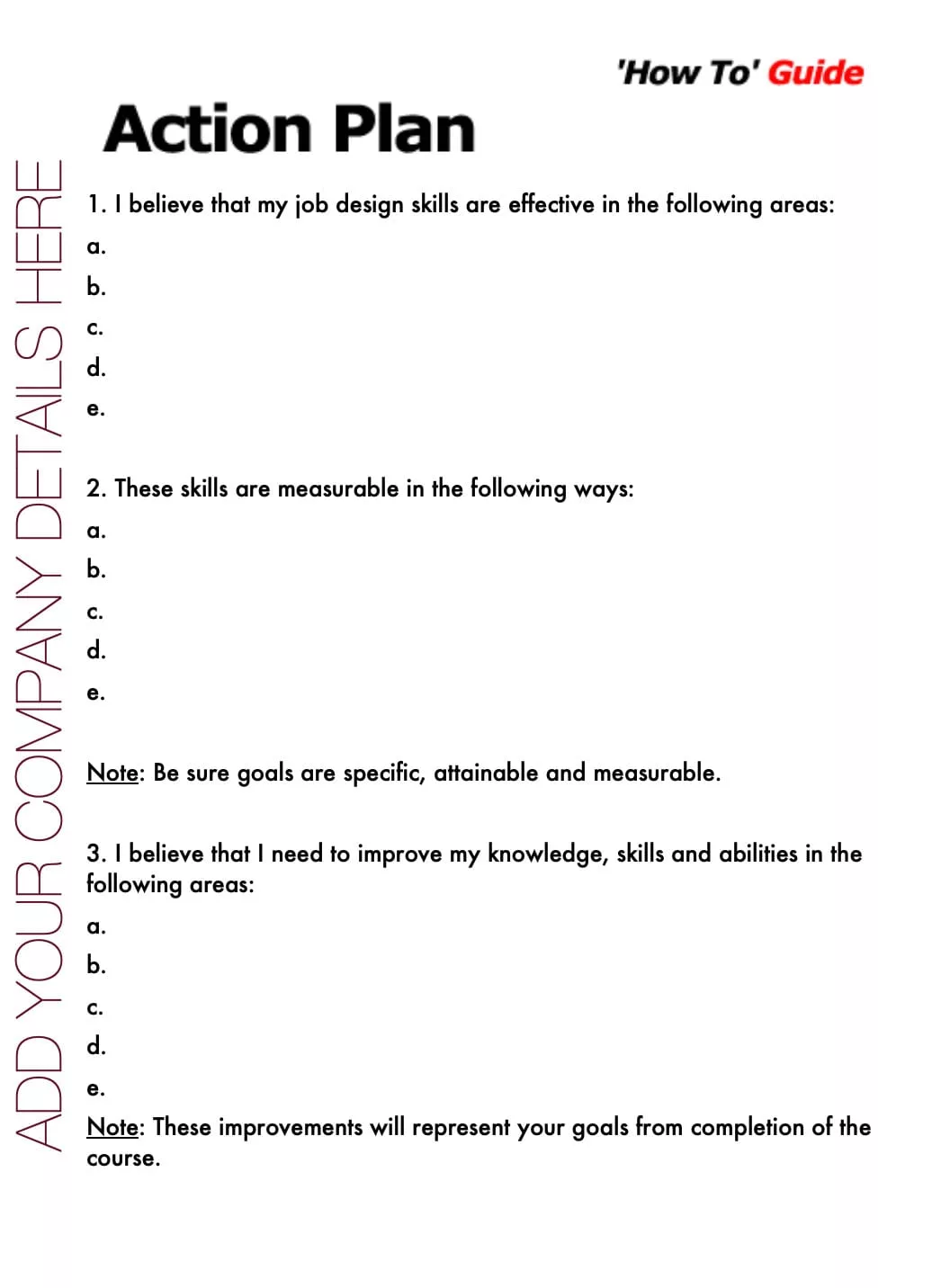
Take a closer look at the presentation materials before purchasing your job design skills training package.
We intentionally use generic backgrounds and titles so you can incorporate your own branding, presentation style, organizational terminology, and workplace examples.
Who Will Benefit From Your Workshop?
This job design skills training is suitable for individuals who want to develop a stronger understanding of how work is organized and how job design decisions may influence employees, teams, and organizations.
- HR professionals responsible for developing and reviewing job roles that support employee performance and organizational requirements.
- Managers and department heads who want to explore how tasks, responsibilities, and workloads are organized within their teams.
- Organizational development specialists involved in reviewing job structures, redesigning roles, and supporting organizational effectiveness.
- Operations managers considering the relationship between work organization, efficiency, productivity, and employee job satisfaction.
- Team leaders interested in exploring job enrichment and job enlargement as approaches to organizing responsibilities and developing employees.
- Workforce planning professionals who want to understand how job structures relate to changing organizational requirements.
- Emerging managers and HR practitioners developing their understanding of job design principles and the relationship between people, work, and organizational performance.
Work Is Organized Differently In Every Business. Your Training Should Reflect That.
Designing a role within a manufacturing environment involves different considerations from organizing work within a customer service team, a professional services business, or a technical department.
Some roles require greater task variety. Others may benefit from reviewing responsibilities, working arrangements, resource requirements, or opportunities for employee development.
Job design decisions need to reflect the nature of the work and the circumstances of the people and organizations involved.
Oak Innovation’s editable job design courseware gives you the flexibility to connect established job design concepts with the roles, working arrangements, and organizational challenges familiar to your participants.
- Customize the PowerPoint presentation to reflect your organization’s job design and HR development priorities.
- Incorporate examples of existing job roles, responsibilities, and organizational structures.
- Adapt the 39-page participant workbook and training activities to your audience.
- Include your own examples of job enlargement, job enrichment, and job simplification.
- Connect job-person fit concepts with relevant role requirements and employee capabilities.
- Incorporate examples of working arrangements, task allocation, and changing organizational responsibilities.
- Explore how job design concepts relate to your organization’s employee development and performance management priorities.
- Add your own branding to the editable course materials.
- Reuse the training resources for future workshops in accordance with your reuse license.
Whether you’re preparing a job design workshop for HR professionals, supporting an internal organizational development initiative, or delivering customized management training for your clients, you can tailor the materials to reflect your training objectives.
The materials can also be adapted for classroom, virtual, or blended training delivery, with activities adjusted to suit the learning environment.
Job design decisions should consider employee consultation, workload, accessibility, health and safety, applicable employment requirements, and organizational policies. Trainers should review and adapt the materials to reflect these considerations where relevant.
Your organizational structures. Your workplace examples. Your professional branding.
No subscriptions. No recurring fees. No attribution required.
Frequently Asked Questions.
What is job design skills training?
Job design skills training explores how tasks, responsibilities, role requirements, and working arrangements can be organized. This course examines job design principles, job-person fit, employee performance, job satisfaction, and established approaches to organizing work.
What is included in the job design training package?
You receive 61 editable PowerPoint slides, a 46-page trainer guide, a 39-page participant workbook, and 17 practical training activities, including icebreakers, games, and exercises. The materials are available as an instant digital download.
Who can benefit from job design training?
The training is suitable for HR professionals, managers, organizational development specialists, operations managers, team leaders, and workforce planning professionals who want to develop their understanding of job design and work organization.
Which job design approaches and theories are covered?
The course explores job enlargement, scientific management, job enrichment, job characteristics theory, job simplification, related management theories, critical psychological states, and alternative work schedules.
What is the difference between job enlargement and job enrichment?
Job enlargement generally involves increasing the range of tasks within a role. Job enrichment focuses more on increasing responsibility, autonomy, and opportunities for meaningful contribution. Both approaches are explored within the job design training materials.
How can job design influence employee motivation and job satisfaction?
The way work is organized may influence task variety, responsibility, autonomy, employee experiences, and opportunities for development. The course explores job design concepts that can help participants consider the relationship between work characteristics, motivation, performance, and job satisfaction.
Does the course cover job-person fit and alternative work schedules?
Yes. The course explores job-person fit and alternative work schedules as considerations within job design. Participants can examine how job requirements, individual capabilities, and working arrangements may relate to employee and organizational needs.
How is job design different from job analysis?
Job analysis focuses on understanding the responsibilities, requirements, and characteristics of a job. Job design focuses on how tasks, responsibilities, and working arrangements are organized. Job analysis information can help inform job design decisions, making the two subjects closely connected.
Can I customize the materials and deliver the training online?
Yes. The editable white-label courseware allows you to incorporate your own branding, organizational structures, job roles, and workplace examples. The materials can be adapted for classroom, virtual, or blended workshops, with activities adjusted to suit the delivery format.
Can I reuse the training materials and access them immediately?
Yes. The training materials are available as an instant digital download after purchase and can be reused in accordance with the terms of your reuse license. There are no subscriptions, recurring fees, or attribution requirements.
What Trainers Say About Oak Innovation.
★★★★★ “Edit, customize (logos, etc.), and deliver as many times as you like — you own it forever.” – Tom Heck, Intl. Assoc. of Teamwork Facilitators.
★★★★★ “Excellent for customization while maintaining core knowledge… Increased participant activities.” – Theadus McClain, FKP Architects.
★★★★★ “Flexibility in customization is your greatest USP—perfect foundation to build on.” – Arun Data, Escorts Heart Institute.
★★★★★ “Highly adaptable across government, commercial, and private sectors.” – James L. Steward.
Design The Work. Consider The People Who Perform It.
Effective job design involves considering both what an organization needs to achieve and how employees experience the work they are responsible for performing.
Questions about task variety, responsibility, job-person fit, working arrangements, and employee satisfaction deserve consideration when reviewing how work is organized.
Oak Innovation’s job design skills training courseware brings these important concepts together in one complete, editable HR training package.
From the foundations of job design to job enlargement, job enrichment, scientific management, job characteristics theory, and alternative work schedules, the materials provide structured content around which to build your workshop.
With 61 editable PowerPoint slides, 85 pages of combined trainer and participant resources, and 17 practical training activities, you can concentrate on helping participants explore the job design challenges relevant to their organizations.
Bring your HR experience, management knowledge, and professional expertise to a training package designed to support your own course delivery.
One-time payment. Professional job design courseware. Your branding. Unlimited reuse.
61 editable PowerPoint slides • 46-page trainer guide • 39-page participant workbook • 17 activities • Instant download • Unlimited reuse
Explore different ways of organizing work. Consider employee and organizational needs. Develop a more informed approach to job design.
The Brands That Trust Our Content.





























The Content Behind The Results.
-

Eliminate The Preparation Bottleneck With The Strategic HRM Course
$37.00 - One Payment. Unlimited Reuse. Add to cart -

For Trainers Who Want To Teach Continuous Performance Enablement And Feedback Courses
$37.00 - One Payment. Unlimited Reuse. Add to cart -

Job Analysis Skills Course Material | Editable HR Training Courseware
$37.00 - One Payment. Unlimited Reuse. Add to cart -

Ready-To-Use Interview Skills Course Material For Ambitious Trainers
$37.00 - One Payment. Unlimited Reuse. Add to cart -

Skills Gap Analysis And Capability Mapping Course Material | Training Needs Analysis Courseware
$37.00 - One Payment. Unlimited Reuse. Add to cart -

Stop Building Job Design Skills Courses. Start Delivering Them.
$37.00 - One Payment. Unlimited Reuse. Add to cart -

You Have The Expertize On Presence Management. We Have The Training Content On Employee Absenteeism And Attendance Management.
$37.00 - One Payment. Unlimited Reuse. Add to cart -

You Want To Deliver 360° Continuous Feedback And Performance Enablement Training Courses, Not Spend Weeks Creating Them
$37.00 - One Payment. Unlimited Reuse. Add to cart -

You Want To Launch Competency Development Courses Without Starting From Zero
$37.00 - One Payment. Unlimited Reuse. Add to cart -

Your Next Recruitment Skills Training Course Is Already Built
$37.00 - One Payment. Unlimited Reuse. Add to cart