Understand The Business Behind The Work. Help Your Participants See The Bigger Organizational Picture.
A competitor introduces a new product. Customer expectations change. Technology creates new opportunities. Rising supplier costs place pressure on existing business operations.
Each development can influence the decisions an organization makes, the capabilities it needs, and the priorities it establishes.
For managers, supervisors, and business professionals, understanding these wider influences can provide valuable context for everyday workplace decisions.
Organizational effectiveness involves more than completing tasks efficiently. It also requires an understanding of the environment in which a business operates, the resources available to it, and the strategies it chooses to pursue.
Developing a training workshop that brings these concepts together requires considerable preparation.
There are strategic frameworks to research, presentation slides to create, facilitator notes to prepare, and practical learning activities to develop.
Oak Innovation’s The Work Organization – Training Courseware For Organizational Effectiveness provides a professionally prepared foundation for delivering these workshops without creating every training resource yourself.
You receive 66 editable PowerPoint slides, a 49-page trainer guide, a 43-page participant workbook, and 17 practical training activities.
Across five structured modules, participants explore organizational environments, the product life cycle, competitive advantage, the five forces of competition, key business capabilities, and five generic competitive strategies.
With the core training resources already prepared, you can concentrate on the industries, competitive challenges, organizational priorities, and business decisions relevant to your participants.
Download the complete training package, incorporate your own business examples, customize the resources, and deliver professional work organization training under your own branding.
Help your participants understand not only how organizations operate, but also why they make the strategic choices they do.
Developing a broader workplace effectiveness program? Complement this course with our dedicated training materials on time management skills and personal productivity skills to connect wider organizational priorities with individual working practices and personal effectiveness.
Trusted By Training Professionals Across Different Business Environments.





































Who Are These Work Organization Training Materials For?
These editable work organization resources are designed for professionals delivering structured workshops on organizational effectiveness, business environments, competitive advantage, and strategic planning concepts.
- Corporate trainers delivering work organization and business development workshops.
- HR and learning and development professionals supporting management development and organizational learning initiatives.
- Independent trainers and training consultants preparing customized business effectiveness workshops for their clients.
- Management development professionals helping managers understand wider organizational and competitive influences.
- Organizational development professionals exploring the relationship between business capabilities and strategic priorities.
- Business managers responsible for developing commercial awareness within their teams.
- Leadership development trainers introducing emerging leaders to organizational environments and strategic decision-making.
- Educators and professional development facilitators delivering workshops on business strategy and organizational effectiveness.
Whether you’re introducing business strategy concepts to new managers, developing commercial awareness among employees, or preparing customized training for a client, you can adapt the materials to reflect your audience and learning objectives.
Learning Objectives.
By the end of your work organization workshop, participants will be able to:
- Understand the nature of organizations and the environments in which they operate.
- Distinguish between internal, external, and competitive business environments.
- Explore the four stages of the product life cycle presented within the course.
- Recognize how product life cycle considerations can inform organizational planning.
- Understand the importance of competitive advantage within different business environments.
- Examine different perspectives on how organizations develop competitive advantage.
- Identify the five competitive forces that can influence industry conditions.
- Explore the relationship between competitive pressures and organizational strategy.
- Recognize the importance of skills, technology, manufacturing, marketing, and distribution.
- Distinguish between five generic competitive strategies.
- Examine how different strategic choices may influence organizational priorities and resource requirements.
- Use established business frameworks to support discussions about organizational planning and decision-making.
- Develop a broader understanding of the relationship between business strategy and organizational effectiveness.
What’s Covered.
The courseware brings together five interconnected areas of organizational and strategic understanding, providing a structured progression from examining business environments to exploring competitive forces, organizational capabilities, and strategic choices.
Participants consider how internal resources and external business conditions can influence the way organizations establish priorities and pursue competitive advantage.
1. Understanding Organizations And Their Business Environments
Introduce participants to the nature of organizations and examine the different environments that can influence business activities, organizational planning, and strategic decisions.
- What is an organization? – exploring the nature and purpose of organizations within different business environments.
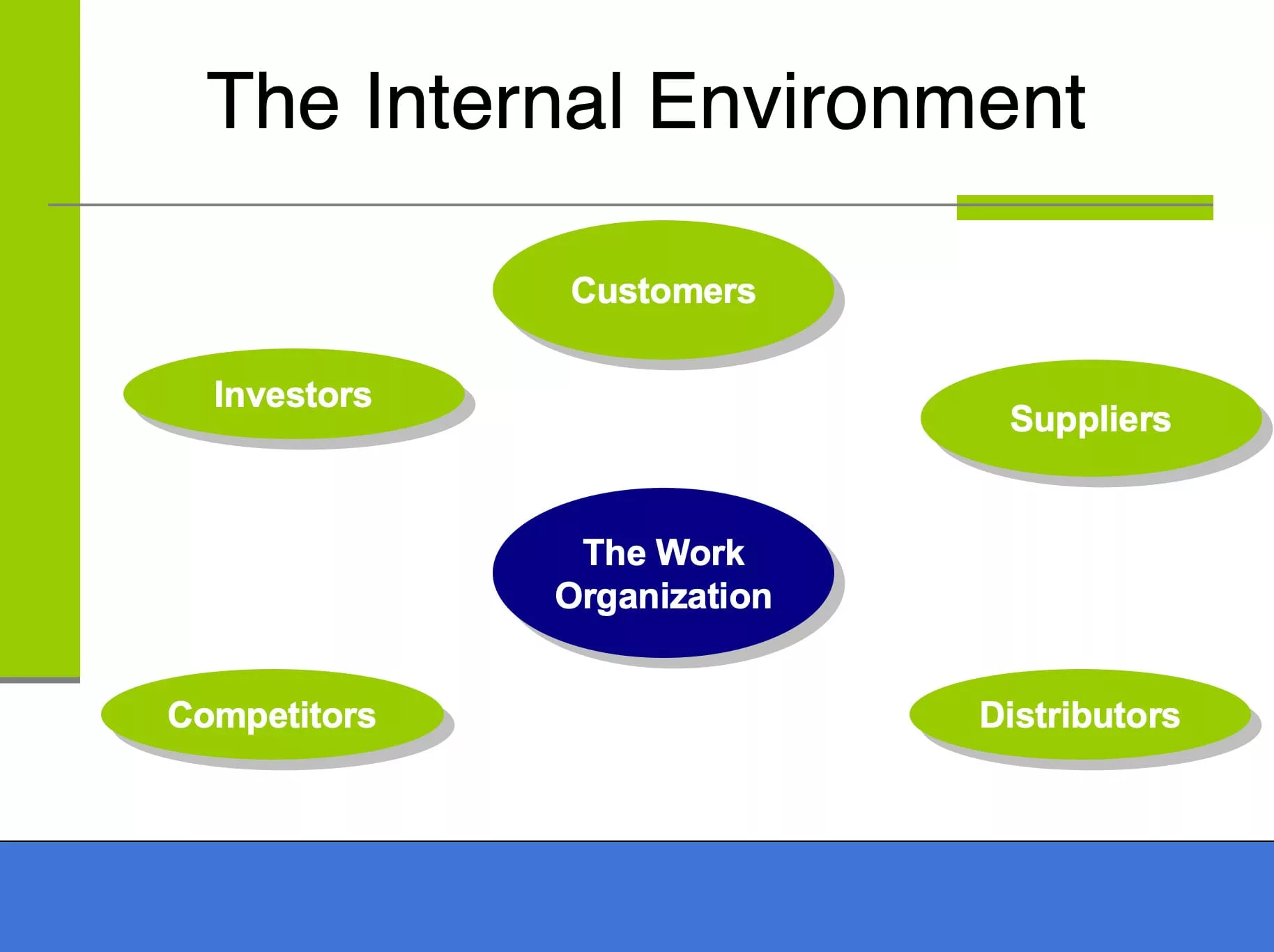
- The internal environment – examining factors within an organization that can influence its activities and capabilities.
- The external environment – considering wider business conditions that may influence organizational decisions.
- The competitive environment – exploring the relationship between an organization and the businesses with which it competes.
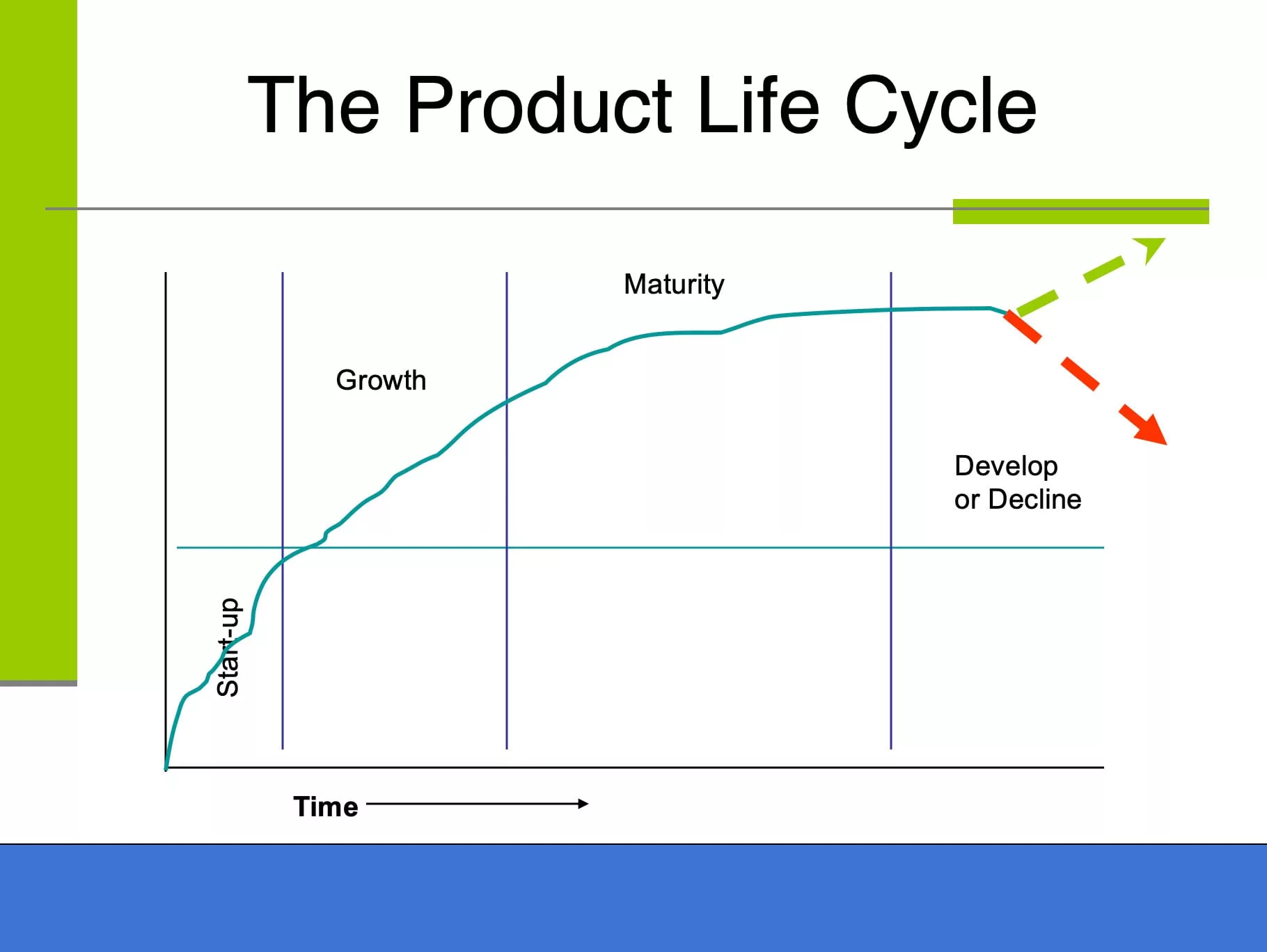
- The product life cycle – introducing a framework for examining how products develop and change over time.
The Four Product Life Cycle Stages Covered In The Course:
- Start-up – considering the early stages of introducing a product to its market.
- Growth – exploring the implications of increasing demand and market development.
- Maturity – examining the challenges associated with established products and markets.
- Development or decline – considering the strategic choices associated with further product development or declining market demand.
Different stages of a product’s life cycle may present different organizational challenges.
A business introducing a new product may prioritize market awareness, distribution, and customer acquisition. An established product may require greater attention to differentiation, cost management, or further development.
The product life cycle provides a framework for discussing these considerations rather than a fixed prediction of how every product will perform.
Trainers can incorporate their own examples of products, services, changing customer expectations, and developments within their participants’ industries.
Supplementary discussion questions may include:
- Which internal factors influence your organization’s ability to achieve its objectives?
- What external developments could affect your organization’s priorities?
- How might business requirements change as a product becomes established?
- What capabilities might an organization need when introducing a new product?
- How can changing market conditions influence the way work is organized?
This introductory module establishes the foundation for examining competitive advantage and strategic choices throughout the remaining course content.
2. Understanding Competitive Advantage
Explore the importance of competitive advantage and examine different perspectives on how organizations seek to establish and maintain a favorable position within their markets.
- The importance of competitive advantage – understanding why organizations seek to distinguish themselves from competitors.
- Perspectives on competitive advantage – examining different ways businesses may develop and maintain competitive strengths.
- Organizational capabilities – considering how internal resources and capabilities can contribute to competitive positioning.
- Strategic priorities – exploring the relationship between competitive objectives and organizational decisions.
Organizations may compete through different combinations of cost, quality, service, innovation, specialist expertise, and customer value.
What provides a competitive advantage for one organization may not provide the same advantage for another.
A business operating in a price-sensitive market may establish different priorities from a business competing through specialist services or distinctive product features.
Understanding these differences can help participants consider why organizations invest in particular capabilities, establish different performance priorities, and organize their activities in different ways.
Trainers can introduce their own examples of competing organizations, distinctive customer offerings, and business capabilities relevant to their participants.
Supplementary discussion questions may include:
- Why might customers choose one organization over another?
- What capabilities help an organization distinguish itself from competitors?
- How can changing customer expectations influence competitive advantage?
- What happens when competitors develop similar products or services?
- How might organizational priorities change when competitive advantages become less distinctive?
This module encourages participants to connect organizational activities with the wider commercial reasons behind them.
3. Exploring The Five Forces Of Competition
Introduce participants to the five forces framework for examining competitive pressures within an industry and understanding how these pressures may influence business strategy.
The framework provides a structured approach to considering competition beyond the activities of existing rival businesses.
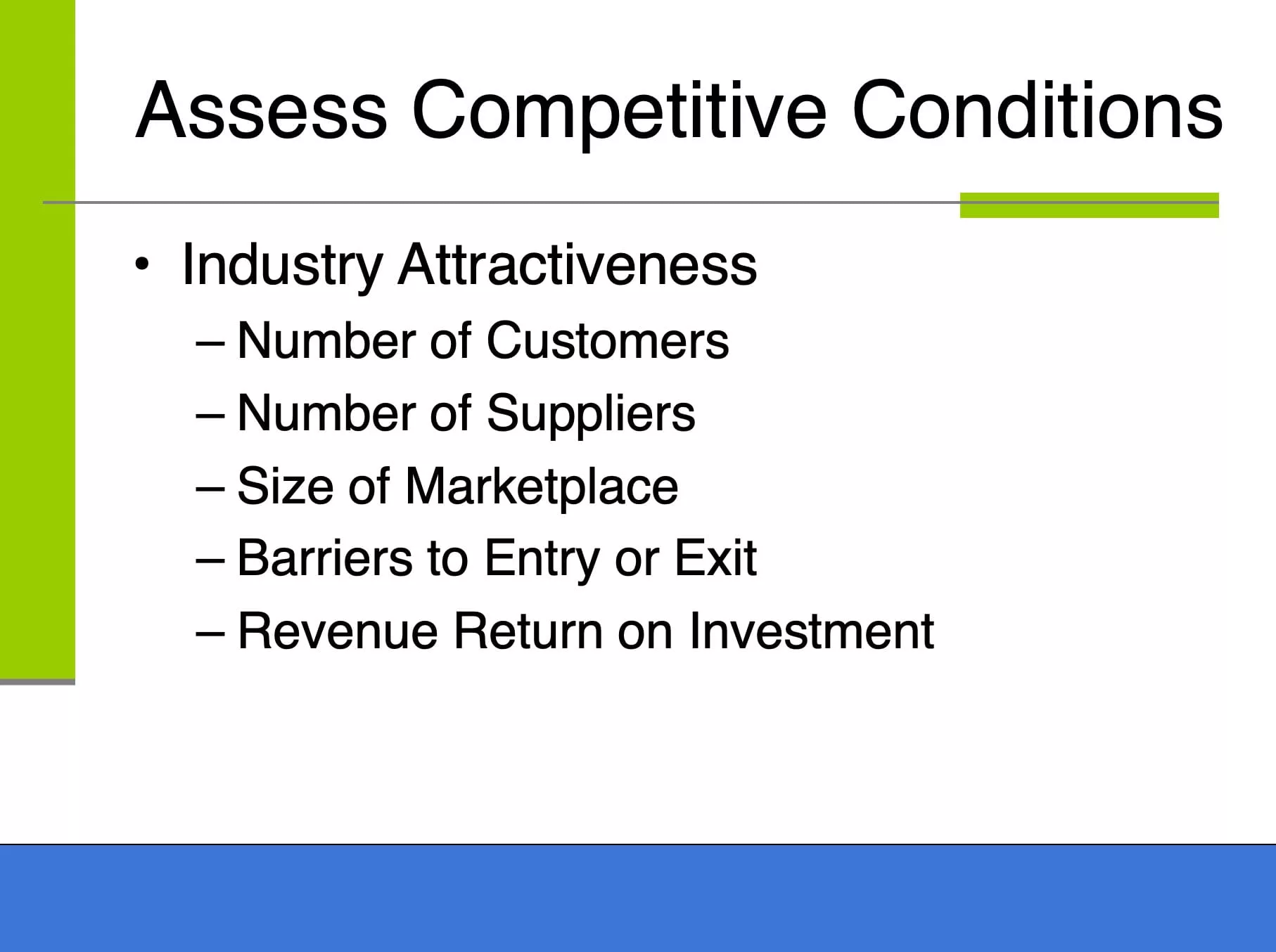
- The threat of substitute products – examining how alternative products or services may influence customer choices and market demand.
- The bargaining power of buyers – considering the influence customers may have over prices, purchasing conditions, and business expectations.
- The threat of new entrants – exploring the potential impact of new competitors entering an established market.
- The bargaining power of suppliers – examining how supplier relationships, availability, and purchasing conditions may influence business operations.
- Rivalry among competing sellers – considering the intensity and nature of competition between existing businesses.
Competitive pressure can come from several directions.
A business may face established competitors, customers demanding better purchasing terms, suppliers increasing prices, or alternative products that change customer expectations.
Examining these influences individually can help participants develop a more structured understanding of the competitive environment.
For example, trainers can incorporate their own supplementary business scenarios involving:
- A new competitor entering an established market.
- Customers switching to alternative products or services.
- A supplier increasing the cost of essential materials.
- Large customers negotiating more favorable purchasing terms.
- Existing competitors introducing new products or changing prices.
Participants can consider how these developments might influence organizational priorities, resource requirements, and strategic decisions.
The five forces framework is a tool for examining industry conditions rather than a guarantee of competitive success or a prediction of future business performance.
Trainers can adapt the discussion to manufacturing, professional services, retail, technology, distribution, or other relevant business environments.
4. Identifying Key Business Factors And Organizational Capabilities
Examine five key business factors that can influence organizational capabilities and contribute to the way businesses operate and compete.
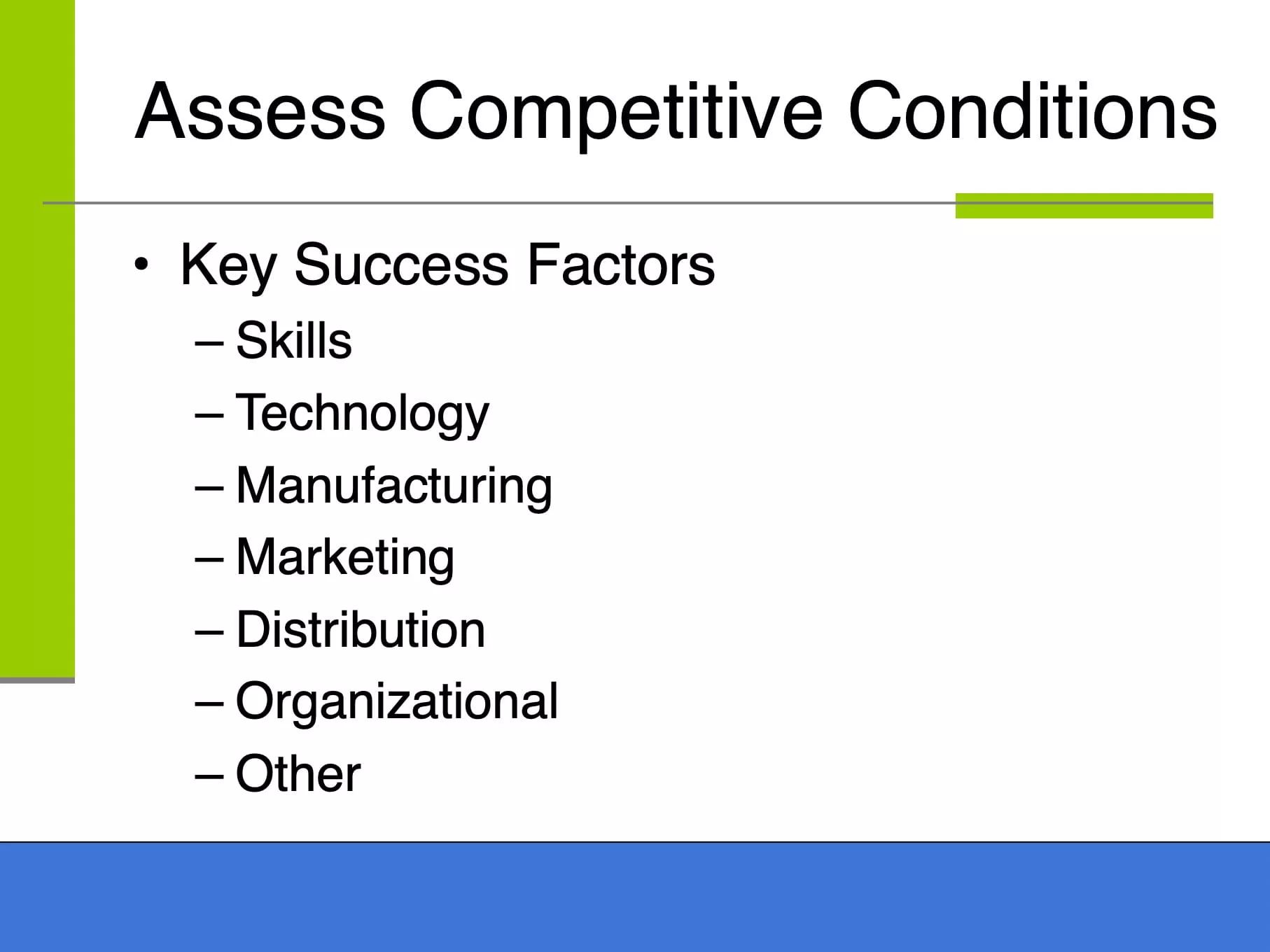
- Skills – considering the knowledge, expertise, and capabilities available within an organization.
- Technology – exploring the role of technological resources in supporting business activities and competitive capabilities.
- Manufacturing – examining the contribution of production capabilities and manufacturing activities where relevant to the organization.
- Marketing – considering how organizations communicate customer value and position their products or services.
- Distribution – exploring the role of making products and services available to customers.
Competitive strategies need to be considered alongside the capabilities available to support them.
A business seeking to distinguish itself through specialist expertise may need to develop different employee capabilities from a business competing primarily through low operating costs.
Similarly, organizations may need different combinations of technology, marketing resources, production capabilities, and distribution arrangements depending on their business objectives.
Trainers can incorporate their own examples of organizational resources, employee capabilities, business processes, and operational requirements.
Supplementary discussion questions may include:
- Which skills are particularly important to your organization’s competitive position?
- How does technology support your organization’s activities?
- What role do marketing and distribution play in delivering customer value?
- Which organizational capabilities may need further development?
- How can business priorities influence employee development requirements?
This module connects strategic understanding with the practical resources and capabilities organizations use to support their activities.
5. Understanding Five Generic Competitive Strategies
Explore five generic competitive strategies and examine how different approaches to competition can influence organizational priorities, customer offerings, and resource decisions.
- Overall low-cost leadership – examining an approach that emphasizes developing a competitive cost position across a broad market.
- Broad differentiation strategy – exploring how organizations seek to distinguish their products or services across a wider customer market.
- Focused low-cost strategy – considering an approach that emphasizes cost advantages within a particular market segment.
- Focused differentiation strategy – examining how organizations develop distinctive offerings for a specific customer group or market segment.
- Best cost-provider strategy – exploring an approach that seeks to combine attractive customer value with a competitive cost position.
Different competitive strategies can require different organizational capabilities and working priorities.
A business pursuing low-cost leadership may place particular emphasis on operational efficiency and cost control.
A business pursuing differentiation may prioritize specialist knowledge, innovation, customer experience, or distinctive product features.
An organization serving a focused market segment may need a detailed understanding of the particular requirements of its target customers.
These approaches provide useful reference points for discussing business strategy. They do not establish a universally superior strategy for every organization.
Trainers can introduce their own examples of businesses competing through different combinations of price, quality, specialization, service, and customer value.
Supplementary discussion questions may include:
- What distinguishes a low-cost strategy from a differentiation strategy?
- Why might an organization concentrate on a particular customer segment?
- What capabilities would support a focused differentiation strategy?
- How might different competitive strategies influence organizational priorities?
- What challenges could arise when a business attempts to balance cost and customer value?
- How do an organization’s existing capabilities influence its strategic choices?
This final module brings together the organizational environments, competitive pressures, business capabilities, and strategic concepts explored throughout the course.
The emphasis is on developing a broader understanding of how strategic choices can influence organizational activities and business effectiveness.
Free Work Organization Course Preview.
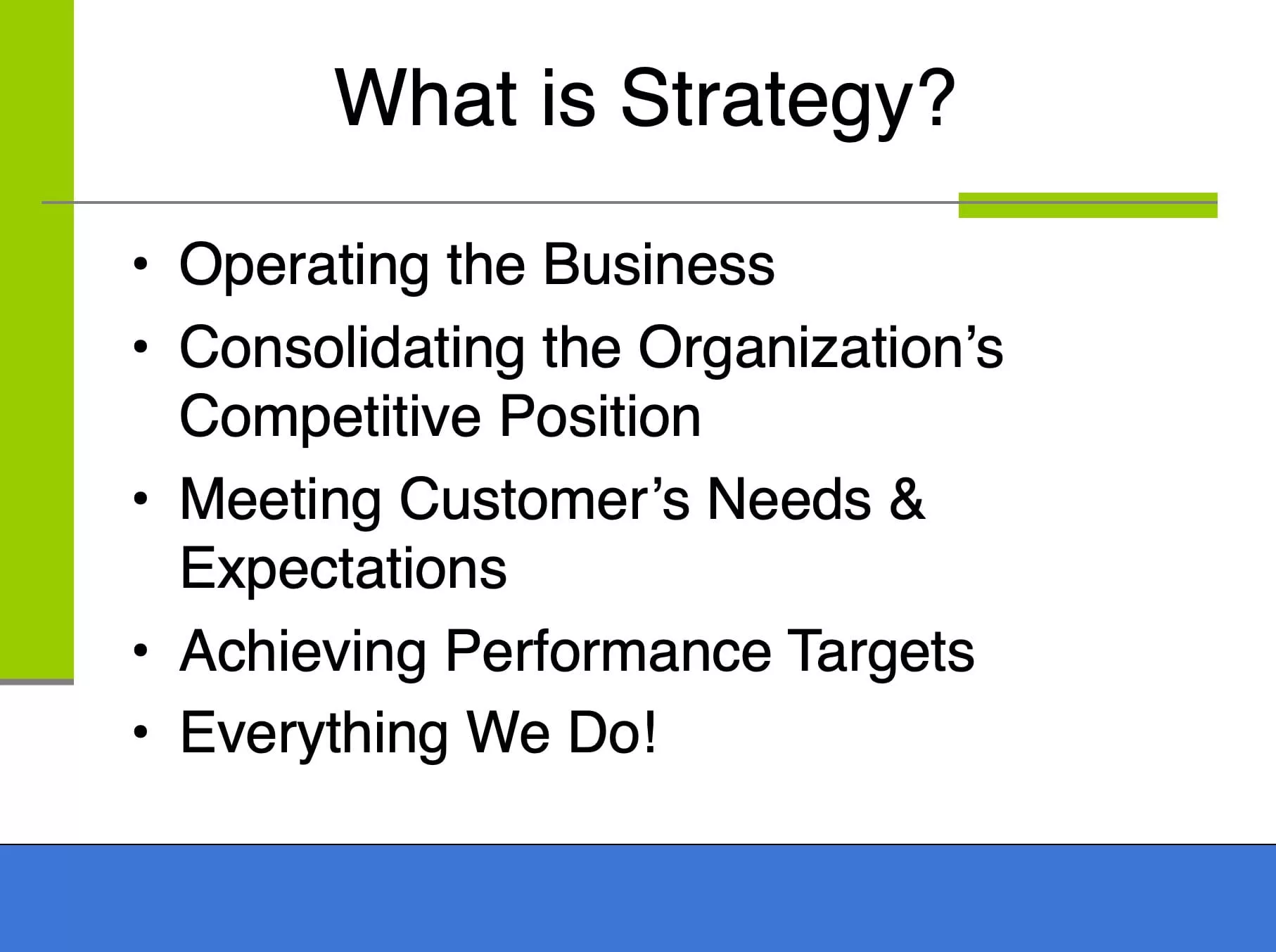
Explore sample presentation materials from The Work Organization Training Courseware before purchasing your complete training package.
We intentionally use generic backgrounds and titles so you can incorporate your own branding, business terminology, organizational examples, and professional presentation style.
Who Will Benefit From Your Workshop?
This work organization course is suitable for individuals who want to develop a broader understanding of organizational environments, competitive strategy, business capabilities, and the factors that influence organizational effectiveness.
- Managers and supervisors who want to understand how internal and external business environments influence organizational planning and workplace decisions.
- Business professionals interested in exploring competitive forces, organizational strategies, and sources of competitive advantage.
- Team leaders seeking to understand how wider business priorities and strategic decisions affect their teams.
- Employees preparing for management responsibilities who want to develop their understanding of organizational planning and business strategy.
- Business owners interested in exploring established frameworks for understanding competitive environments and strategic choices.
- Emerging leaders developing commercial awareness and a broader understanding of organizational effectiveness.
- Operations professionals seeking to understand the relationship between business capabilities and strategic priorities.
- Organizational development professionals exploring how competitive conditions and business objectives can influence organizational requirements.
Different Markets. Different Capabilities. Different Priorities. Make Your Training Reflect The Business.
A manufacturing organization may need to consider production capabilities, supplier relationships, and distribution requirements.
A professional services business may compete through specialist expertise, customer relationships, and service differentiation.
A retail business may place particular emphasis on pricing, product availability, customer expectations, and competitive positioning.
Each business environment presents different organizational and strategic challenges.
Oak Innovation’s editable work organization courseware gives you the flexibility to connect established business frameworks with the organizational environments familiar to your participants.
- Customize the 66-slide PowerPoint presentation to reflect your business development priorities.
- Incorporate examples from your own organization, industry, and competitive environment.
- Adapt the 43-page participant workbook to your audience and learning objectives.
- Use the 49-page trainer guide to support workshop preparation and delivery.
- Introduce relevant examples of internal and external business influences.
- Connect product life cycle discussions with products and services familiar to your participants.
- Adapt competitive advantage discussions to reflect your industry and customer requirements.
- Incorporate supplementary examples of the five competitive forces.
- Explore organizational capabilities relevant to your participants’ professional responsibilities.
- Connect generic competitive strategies with examples of real business decisions.
- Use the 17 practical training activities to encourage participation, discussion, and reflection.
- Adapt activities for classroom, virtual, or hybrid workshop delivery.
- Add your own branding to the editable training materials.
- Reuse the training resources for future workshops in accordance with your reuse license.
Whether you’re delivering a management development workshop, supporting a commercial awareness program, or preparing customized organizational effectiveness training for your clients, you can adapt the resources to reflect your professional requirements.
Trainers can also incorporate their own contemporary examples involving digital transformation, changing customer expectations, emerging technologies, supply chain disruption, and evolving competitive environments.
The core courseware focuses on organizational environments, competitive advantage, business capabilities, and strategic frameworks rather than specialist workforce scheduling, Agile project management methodologies, or workforce optimization software.
Your business environment. Your strategic priorities. Your professional branding.
No subscriptions. No recurring fees. No attribution required.
Purchase the complete training package once and reuse the materials for future workshops in accordance with your reuse license.
Frequently Asked Questions.
What is Oak Innovation's Work Organization Training Courseware?
This is a downloadable, editable professional training package designed to help trainers deliver workshops on organizational environments, competitive advantage, business capabilities, and strategic decision-making across five structured modules.
What is included in the work organization training package?
You receive 66 editable PowerPoint slides, a 49-page trainer guide, a 43-page participant workbook, and 17 practical training activities, including icebreakers, games, and exercises. The complete package is available as an instant digital download.
Who can benefit from work organization training?
The training is suitable for managers, supervisors, team leaders, business professionals, emerging leaders, and employees preparing for management responsibilities who want to understand organizational environments and strategic business considerations.
Does the course cover organizational and competitive environments?
Yes. Participants explore internal, external, and competitive business environments and consider how these influences can affect organizational priorities, planning, and strategic decisions.
Does the training cover the product life cycle?
Yes. The course examines four stages described within the materials as start-up, growth, maturity, and development or decline. Participants explore how product life cycle considerations can inform organizational planning and business discussions.
What are the five forces of competition covered in the course?
The course examines the threat of substitute products, bargaining power of buyers, threat of new entrants, bargaining power of suppliers, and rivalry among competing sellers as a framework for understanding competitive pressures.
Which competitive strategies will participants explore?
Participants examine five generic competitive strategies: overall low-cost leadership, broad differentiation, focused low-cost, focused differentiation, and best cost-provider strategy. The course considers how different strategic approaches may influence organizational priorities.
Is this a workforce optimization or Agile management training course?
The core curriculum focuses on organizational effectiveness, competitive environments, business capabilities, and strategic frameworks. It is not a specialist course on workforce scheduling, Scrum, Kanban, or workforce optimization software. Trainers can supplement the materials with their own relevant organizational examples.
Can I customize the work organization training materials for my organization or clients?
Yes. The editable white-label courseware allows you to incorporate your own branding, industry examples, business terminology, organizational priorities, and supplementary activities. You can adapt the materials for classroom, virtual, or hybrid workshop delivery.
Can I download and reuse the work organization training materials?
Yes. The complete training package is available as an instant digital download after purchase. There are no subscriptions, recurring fees, or attribution requirements for the courseware, and you can reuse the materials for future workshops in accordance with your reuse license.
What Trainers Say About Oak Innovation.
★★★★★ “Oak creates self-contained, practical, and easy-to-use training modules… with personal service.” – Rey Carr, Peer Resources.
★★★★★ “This program is ready to go! Complete and comprehensive as I’ve ever seen.” – Dave Benak, TrainingPays.
★★★★★ “Courses are laid out so well and spark natural dialogue… Most thorough content you can find.” – Bryon Jennings.
★★★★★ “The notes for facilitator were simple and easy to follow.” – Tracey O’Shea, Forest Laboratories.
Look Beyond The Day-To-Day Tasks. Explore The Strategic Decisions That Shape The Organization.
Why does one business compete through price while another competes through specialist expertise?
Why do organizations invest in different capabilities, establish different priorities, and respond differently to competitive pressures?
Understanding these questions can help managers and business professionals develop a broader perspective on organizational activities and business decisions.
Oak Innovation’s Work Organization Training Courseware brings these considerations together in one adaptable professional training package.
Five structured modules. Four product life cycle stages. Five competitive forces. Five key business factors. Five generic competitive strategies.
With 66 editable PowerPoint slides, 92 pages of combined trainer and participant resources, and 17 practical training activities, you have a professionally prepared foundation for your next organizational effectiveness workshop.
Bring your business knowledge, industry experience, and facilitation expertise to training resources that you can customize for your own audience.
One payment. Your branding. Ongoing reuse.
No subscriptions. No recurring fees. No attribution required.
66 editable PowerPoint slides • 49-page trainer guide • 43-page participant workbook • 17 activities • Instant download • Reuse license
Understand the environment. Examine the competition. Connect strategy with the way organizations work.
The Brands That Trust Our Content.































The Content Behind The Results.
-

Avoid The Course Creation Trap With Our Ready-To-Deliver Quality Management And Operational Excellence Course
$37.00 - One Payment. Unlimited Reuse. Add to cart -

Build Benchmarking Skills. Not Another Course From Scratch.
$37.00 - One Payment. Unlimited Reuse. Add to cart -

Escape The Course Creation Trap With Our Ready-To-Deliver Project Management Training Material
$37.00 - One Payment. Unlimited Reuse. Add to cart -

Everything You Need To Run A Workshop On Technical Report Writing Skills Course In One Download
$37.00 - One Payment. Unlimited Reuse. Add to cart -

For Trainers Who Want To Grow Their Courses On Peak Performance And Personal Productivity Skills
$37.00 - One Payment. Unlimited Reuse. Add to cart -

The Only Thing Missing From This Time Management Course Material Is Your Brand
$37.00 - One Payment. Unlimited Reuse. Add to cart -

The Work Organization Course You Can Put Your Own Name On
$37.00 - One Payment. Unlimited Reuse. Add to cart -

You Bring The expertize. We’ll Bring The Excellent Organization Course Material.
$37.00 - One Payment. Unlimited Reuse. Add to cart -

You Know You Want To Teach Quality And Compliance Auditing Skills. You Just Need The Materials.
$37.00 - One Payment. Unlimited Reuse. Add to cart